
Myrmica latifrons
Stärcke, 1927
Wide-faced Ant
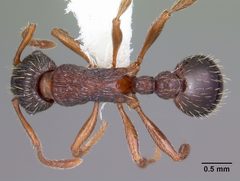
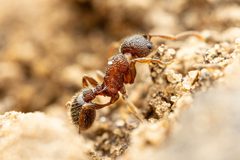
Myrmica latifrons is a of in the Myrmica, first described by Stärcke in 1927. The species is known by the "Wide-faced Ant," reflecting a distinguishing morphological feature. As a member of the Myrmicinae , it belongs to a diverse group of ants that includes many species with specialized ecological relationships. The genus Myrmica is well-known for its associations with various myrmecophilous organisms, including butterflies in the genus Maculinea.

Pronunciation
How to pronounce Myrmica latifrons: /ˈmɪrmɪkə ˈlæ.tɪ.frɒnz/
These audio files are automatically generated. While they are not always 100% accurate, they are a good starting point.
Identification
The wide or (reflected in both the scientific and ) likely serves as a key diagnostic feature distinguishing this from . Detailed morphological examination would be required for definitive identification, as Myrmica species are often difficult to distinguish without close inspection of specific character combinations.
Images
Distribution
The has been documented with 34 observations on iNaturalist, though specific geographic range details are not well-documented in available sources. As a Myrmica species, it likely occupies temperate regions where the is diverse.
Ecological Role
As a Myrmica , M. latifrons may serve as a for myrmecophilous organisms. The Myrmica is notably the host for large blue butterflies (Maculinea spp.), including the extinct-then-reintroduced Maculinea arion in the UK, which has an obligate relationship with Myrmica sabuleti. Whether M. latifrons participates in similar specialized associations has not been documented.
Similar Taxa
- Myrmica sabuletiAnother Myrmica with documented ecological importance as for the large blue ; both share the and potentially similar preferences.
- Other Myrmica speciesThe Myrmica contains numerous morphologically similar that require detailed examination for proper identification; the wide-faced characteristic distinguishes M. latifrons from many .
More Details
Taxonomic History
Described by Stärcke in 1927, this has received limited detailed study in the primary literature available in English. The original description and any subsequent taxonomic revisions would require consultation of specialized myrmecological literature.
Data Availability
Current knowledge of this is limited, with most information coming from taxonomic databases (Catalogue of Life, GBIF, NCBI) and citizen science observations (iNaturalist). Detailed biological studies appear to be sparse in the accessible literature.
Sources and further reading
- BugGuide
- GBIF taxonomy match
- iNaturalist taxon
- NCBI Taxonomy
- Catalogue of Life
- UC Davis Alumnus Marek Borowiec: Remembering E. O. Wilson | Bug Squad
- The Curious Case of the Large Blue Butterfly -- a Conservation Success Story
- Let’s make a deal! | Beetles In The Bush
- Uncategorized | Blog - Part 39
- pleasing fungus beetles | Beetles In The Bush