
Tetramorium hispidum
(Wheeler, 1915)
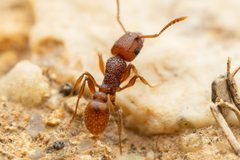
Tetramorium hispidum is a of in the Myrmicinae, first described by Wheeler in 1915. It is distinguished from similar ants by the structure surrounding its antennal insertions. The species possesses short, stubble-like hairs on the pronotum and frontal carinae, and has 11-segmented . As a member of the Tetramorium, it belongs to a diverse group of ants commonly known as pavement ants.


Pronunciation
How to pronounce Tetramorium hispidum: /tɛtrəˈmɔːriəm ˈhɪspɪdəm/
These audio files are automatically generated. While they are not always 100% accurate, they are a good starting point.
Identification
Tetramorium hispidum can be distinguished from similar Myrmicinae ants by examining the structure surrounding the antennal insertions. The presence of short, stubble-like hairs on the pronotum and frontal carinae provides additional diagnostic characters. The 11-segmented also serve as a distinguishing feature.
Images
Appearance
Tetramorium hispidum has 11-segmented . The pronotum and frontal carinae bear short, stubble-like hairs. The structure surrounding the antennal insertions differs from similar Myrmicinae .
Similar Taxa
- Tetramorium caespitumSimilar in general appearance as a congeneric pavement ant, but T. hispidum differs in antennal insertion structure and the presence of stubble-like hairs on pronotum and frontal carinae
- Other MyrmicinaeT. hispidum is distinguished from other Myrmicinae by the specific structure surrounding its antennal insertions
More Details
Taxonomic Note
Tetramorium hispidum was described by Wheeler in 1915. The Tetramorium contains numerous , some of which form cryptic that are difficult to distinguish morphologically.
Sources and further reading
- BugGuide
- Wikipedia
- GBIF taxonomy match
- iNaturalist taxon
- NCBI Taxonomy
- Catalogue of Life
- Tetramorium caespitum ant - Entomology Today
- Bug Eric: Predator and Prey: Ants versus Termites
- How Ants Do Battle: Toxic Sprays, Thick Armor, Overwhelming Numbers, and More
- Bug Eric: Flying Ants
- Bug Eric: Compost Insects
- Brazil Bugs #4 – Mais dos percevejos | Beetles In The Bush