
Leptothorax sphagnicola
Francoeur, 1986
Leptothorax sphagnicola is a of in the Myrmicinae, described by Francoeur in 1986. The species epithet 'sphagnicola' refers to its association with Sphagnum moss . It belongs to a of small ants commonly known as thief ants or rove ants, though specific ecological details for this species remain poorly documented.
Pronunciation
How to pronounce Leptothorax sphagnicola: //ˌlɛptəˈθɔːræks sfæɡˈnɪkələ//
These audio files are automatically generated. While they are not always 100% accurate, they are a good starting point.
Identification
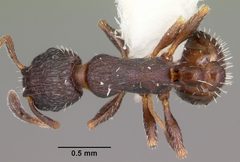
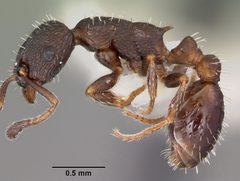
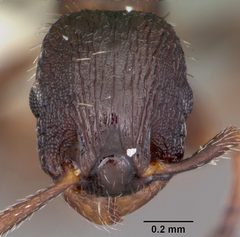
As a member of Leptothorax, this likely exhibits the -typical small size ( usually 2-4 mm), slender body form, and 11-segmented with a 3-segmented club. Definitive identification to species level requires examination of morphological characters described in the original description by Francoeur (1986), including details of the mesosoma, petiole, and postpetiole structure. The species name 'sphagnicola' may indicate preference useful for field identification.
Images
Habitat
The epithet indicates association with Sphagnum moss, suggesting peatland, bog, or wetland dominated by this moss .
Distribution
Described from material collected in Canada; specific locality details require reference to the original description.
Similar Taxa
- Leptothorax muscorumWidespread congeneric in similar northern ; distinguished by subtle morphological differences in petiole node shape and propodeal spine length
- Leptothorax acervorumOverlapping distribution in regions; differs in colony structure and specific nest site preferences
More Details
Taxonomic Note
The Leptothorax has undergone extensive revision; some former members have been transferred to genera such as Temnothorax and Nesomyrmex. The current taxonomic placement of L. sphagnicola within Leptothorax sensu stricto should be verified against recent phylogenetic studies.
Nomenclature
The specific epithet 'sphagnicola' derives from Sphagnum (peat moss ) + -cola (dweller), directly indicating the type of where the was discovered.