
Cephalotes varians
(Smith, 1876)
Northern Caribbean Turtle Ant, turtle ant
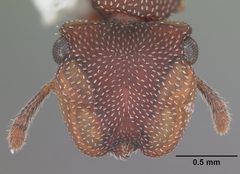
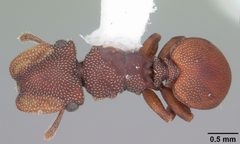
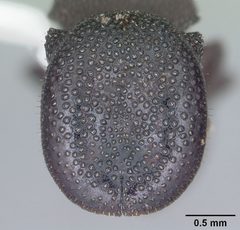
Cephalotes varians is a strongly polyphenic turtle with three distinct female : small-bodied minor , larger phragmotic soldiers with shield-shaped used as living doors to block nest entrances, and reproductive . The exhibits gliding , steering falls from trees using aerodynamic control. Native to the Neotropical region, it has been documented in the Florida Keys and listed as in North America. Brain structure differs markedly among castes, with minor workers possessing disproportionately larger mushroom bodies associated with learning and memory, while soldiers and gynes have enlarged .
Pronunciation
How to pronounce Cephalotes varians: /ˌsɛfəˈloʊtiːz ˈvɛəriənz/
These audio files are automatically generated. While they are not always 100% accurate, they are a good starting point.
Identification
Distinguished from other Cephalotes by the extreme dimorphism between minor and soldiers, with soldiers possessing a near-circular, flattened phragmotic head. The can be separated from C. clypeatus and other Florida Keys sympatric Cephalotes by the specific head shape proportions of soldiers. Gliding and passive defensive posture (tucking appendages, freezing when disturbed) are characteristic but shared with other members of the .
Images
Habitat
Arboreal; specifically documented from red mangrove (Rhizophora mangle) stands in the Florida Keys. Nests in hollow twigs, branches, and other cavities in living or dead wood. Requires pre-existing cavities rather than excavating nest material.
Distribution
Neotropical region. Documented in Florida Keys: Key West, No Name Key, and Key Largo. Listed as in North America in 2016. Native range extends through Caribbean and Central/South America.
Diet
In laboratory culture: 1M sucrose solution and pine pollen. Natural diet in wild not explicitly documented.
Life Cycle
Queenright colonies with winged . Gynes found new colonies singly (haplometrotic colony foundation). During early colony development, gynes overlap behaviorally with soldiers in performing nest-blocking duties. Later in colony development, gynes transition to specialized reproductive role. Colony foundation involves initial cooperative or solitary establishment followed by differentiation as colony grows.
Behavior
Extreme specialization: soldiers function almost exclusively as living doors, using shield-shaped to control nest entry and exit; they perform minimal foraging, care, or other tasks. Minor are task responsible for foraging, brood care, and colony maintenance. When disturbed, workers tuck and legs beneath body flanges, crouch, and freeze in passive defense. Gliding (parachuting) allows controlled descent if dislodged from trees.
Ecological Role
Arboreal cavity-nester; likely contributes to nutrient cycling and connectivity in mangrove and forest . Specific ecosystem functions not documented.
Human Relevance
in North America (Florida Keys) monitored for potential. Subject of neurobiological research on evolution and brain plasticity. Potential for mangrove health.
Similar Taxa
- Cephalotes clypeatusSympatric in Florida Keys; distinguished by soldier proportions and allometric relationships
- Cephalotes floridanusOverlapping range in Florida; differs in soldier shape and degree of specialization
- Cephalotes atratusSimilar arboreal lifestyle and gliding ; distinguished by coloration and soldier
More Details
Brain Evolution
Represents a model system for studying -associated brain evolution. Minor show mushroom body enlargement consistent with cognitive demands of task generalism; soldiers and show enlargement and reduced mushroom bodies, consistent with reduced behavioral repertoire and visual monitoring of nest entrances. Microglomerular organization in mushroom body calyces differs between castes, with minor workers having larger, less dense synaptic complexes.
Phragmosis
Soldier exemplifies extreme morphological specialization for phragmotic defense—using the body itself as a physical barrier. This represents one of the most specialized forms of defensive known in ants.
Sources and further reading
- BugGuide
- Wikipedia
- GBIF taxonomy match
- iNaturalist taxon
- NCBI Taxonomy
- Catalogue of Life
- Meloidae Holdings | Entomology Research Museum
- Holiday meals served by an alien plant and its cosmopolitan guest: Peach-clematis aphid, Myzus varians — Bug of the Week
- Ant Fossils from Europe Resemble Modern Asian Ants
- A tortoise beetle gift | Beetles In The Bush
- Why Fungus-Farming Ants Could Be a Source for New Antimicrobial Compounds
- Naturalists can mediate silent plankton invasions | Blog
- Geographic Distribution ofCephalotes varians(Hymenoptera: Formicidae)
- Division of labor and brain evolution in insect societies: Neurobiology of extreme specialization in the turtle ant Cephalotes varians
- Correction: Division of labor and brain evolution in insect societies: Neurobiology of extreme specialization in the turtle ant Cephalotes varians