
Trachymyrmex septentrionalis
(McCook, 1881)
Northern Fungus-farming Ant
Trachymyrmex septentrionalis is a fungus-farming in the tribe Attini, notable as the northernmost attine . It cultivates symbiotic fungal gardens in underground nests, primarily in sandy soils. The species exhibits sophisticated garden hygiene , detecting and removing -infected garden material using chemical cues. are strongly influenced by drought conditions, with colonies concentrating in mesic microhabitats during dry periods.
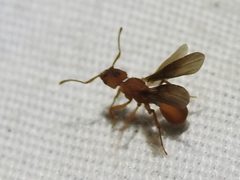
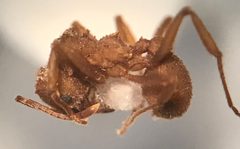
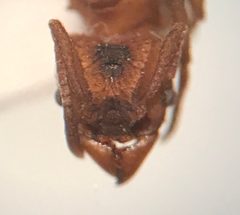
Pronunciation
How to pronounce Trachymyrmex septentrionalis: /ˌtræk.iˈmɜːrmɛks ˌsɛp.tɛnˈtriː.oʊˌnælɪs/
These audio files are automatically generated. While they are not always 100% accurate, they are a good starting point.
Identification
As the northernmost attine , geographic range provides a key distinguishing feature from other Trachymyrmex . have unimodal, near-normal size distributions with tendency toward negative skewness. Long Island show larger workers and greater size variation than Florida populations. Males exhibit reduced size relative to body ('pin-headed' ), a trait shared with related attine .
Images
Habitat
Sandy soils in eastern North America. Colonies concentrate in shaded, mesic microhabitats during drought conditions. Nests are underground with fungus gardens maintained in chambers. suitability is strongly linked to soil moisture and water table levels.
Distribution
Eastern United States from Texas to Florida, north to Illinois, Ohio, and New York. Most widely distributed fungus-growing in the United States. Records from Durango, Mexico likely represent misidentifications of Trachymyrmex carinatus.
Diet
Obligate of symbiotic fungus gardens; the fungal mutualist serves as the primary food source. Bacteria isolated from fungus gardens may contribute to nutrition or garden , though specific functions remain poorly understood.
Host Associations
- symbiotic fungal cultivar - mutualismObligate fungus-farming; ants cultivate fungal gardens as food source
- Trichoderma spp. - Most abundant non-cultivar fungi in wild gardens; peptaibol metabolites induce weeding response
- eight bacterial strains - commensalism or mutualismIsolated from fungus gardens; functions poorly understood, potential secondary metabolite production
Life Cycle
Colony founding occurs, with timing varying by latitude (earlier in Florida, later in Long Island). Colonies show slow recovery following drought-induced mortality. demography varies geographically: Florida colonies show increasing worker size and variation with colony growth, while Long Island colonies show inverse relationship between mean worker size and size variation independent of colony size.
Behavior
Exhibits weeding to maintain fungus garden hygiene: physically remove garden pieces compromised by . Detects Trichoderma through peptaibol chemical cues, inducing weeding responses that mirror reactions to live pathogens. This extended defense response allows differentiation of healthy versus diseased garden sections.
Ecological Role
Fungus-gardening acting as engineer through soil modification. abundance increases during multiyear droughts, suggesting fluctuating ecological impact with climate conditions. Maintains complex microbial in fungus gardens including mutualistic fungi, bacterial associates, and controlled .
Similar Taxa
- Trachymyrmex carinatusVery similar ; Mexican records of T. septentrionalis likely represent this
- Atta and Acromyrmex leafcutter antsMore derived attine ants with similar fungus-farming but distinct morphological and behavioral specializations for leaf processing
More Details
Chemical ecology of garden defense
Ants detect peptaibols—a class of Trichoderma secondary metabolites—as reliable cues of . Two previously undescribed peptaibols (trichokindins VIII and IX) were identified from this system. Weeding response is induced by peptaibols as a class rather than single compounds.
Geographic variation in worker demography
Long Island colonies are adapted for winter survival with larger, more variable . Florida colonies show patterns consistent with rapid colony growth, with worker size scaling positively with colony size.
Drought response ecology
Range contraction to mesic refugia during 2007 record drought; high colony mortality with slow post-drought recovery. predicted to increase abundance and ecological impact during extended drought periods.
Sources and further reading
- BugGuide
- Wikipedia
- GBIF taxonomy match
- iNaturalist taxon
- NCBI Taxonomy
- Catalogue of Life
- Wolbachia in Cockroaches: A New Paradigm for Urban Pest Management?
- Fire ant winged reproductives: male and female | Beetles In The Bush
- Meet the Mosquito With a Big Appetite—for Other Mosquitoes
- The Adaptiveness of Worker Demography in the Attine Ant Trachymyrmex Septentrionalis
- Trachymyrmex septentrionalis ants promote fungus garden hygiene using Trichoderma -derived metabolite cues
- Distribution of the fungus‐gardening ant ( Trachymyrmex septentrionalis ) during and after a record drought
- Trachymyrmex septentrionalis ants promote fungus garden hygiene using Trichoderma -derived metabolite cues
- High-Quality Draft Genome Sequences of Eight Bacteria Isolated from Fungus Gardens Grown by Trachymyrmex septentrionalis Ants