
Camponotus festinatus
(Buckley, 1866)
Festinatus-group Carpenter Ants
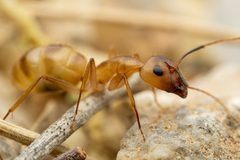
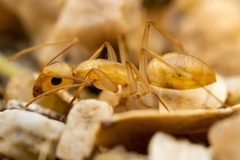
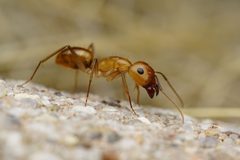
Camponotus festinatus is a carpenter ant native to the southwestern United States and northern Mexico, with a strong association with palo verde trees. Queens are claustral foundresses, founding colonies without foraging for additional food. The species was historically considered a difficult-to-categorize complex due to morphological variation across its range, leading to taxonomic revisions that split off related species and revived others from synonymy.
Pronunciation
How to pronounce Camponotus festinatus: //ˌkæmpəˈnoʊtəs ˌfɛstɪˈneɪtəs//
These audio files are automatically generated. While they are not always 100% accurate, they are a good starting point.
Identification
C. festinatus can be distinguished from other carpenter ants in its range by its association with palo verde trees in the Sonoran Desert region. It belongs to the festinatus , which historically displayed considerable morphological variation; Snelling (2006) noted a "bewildering array of variant forms" across its range. The species complex has undergone revision, with C. absquatulator and C. microps split off as separate , and C. pudorosus and C. fragilis revived from synonymy.
Images
Habitat
Semi-dead branches of palo verde trees in arid and semi-arid environments. The shows strong fidelity to this plant in the Tucson, Arizona area.
Distribution
Southwestern United States (primarily Arizona, especially around Tucson) and northern Mexico.
Diet
Exclusively liquid feeder. Consumes sap from trees and juices from deceased animals. Diet consists primarily of sugar with some protein.
Host Associations
- palo verde trees - nesting siteNests in semi-dead branches
Life Cycle
Behavior
Not aggressive toward humans; soldiers prefer to run rather than attack. Can bite with but lacks a functional sting. Uses acidopore to spray formic acid for defense. Not aggressive except toward other ants.
Human Relevance
Not known to be a significant structural pest. Bites are possible but uncommon due to non-aggressive nature.
Similar Taxa
- Camponotus absquatulatorSplit from C. festinatus by Snelling (2006)
- Camponotus micropsSplit from C. festinatus by Snelling (2006)
- Camponotus pudorosusRevived from synonymy with C. festinatus by Snelling (2006)
- Camponotus fragilisRevived from synonymy with C. festinatus by Snelling (2006)
More Details
Taxonomic History
According to Snelling (2006), C. festinatus was a difficult-to-categorize displaying considerable morphological variation across its vast native range. This revision described two possible undescribed and formally separated C. absquatulator and C. microps as distinct while reviving C. pudorosus and C. fragilis from synonymy.
Sources and further reading
- BugGuide
- Wikipedia
- GBIF taxonomy match
- iNaturalist taxon
- NCBI Taxonomy
- Carpenter ants here and there: Camponotus spp. — Bug of the Week
- Ant bodyguards here and there: Odorous house ants, Tapinoma sessile, and carpenter ants, Camponotus — Bug of the Week
- Big black ants in the home: Carpenter ants, Camponotus spp. — Bug of the Week
- Formicidae | Beetles In The Bush | Page 2
- Bichos Argentinos #10 – Friday Formicine | Beetles In The Bush
- Amped-Up Ants: Caterpillars' Sugary Treats Earn Carpenter Ant Care