
Gnamptogenys triangularis
(Mayr, 1887)
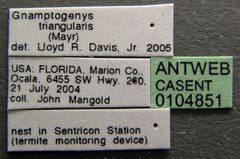
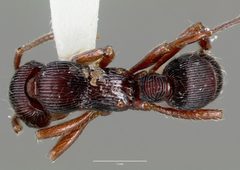
Gnamptogenys triangularis is a of in the Ectatomminae, first described by Mayr in 1887. It belongs to a of predatory ants known for specialized mandibular . The species has been recorded in Colombia and the United States.

Pronunciation
How to pronounce Gnamptogenys triangularis: //ˌnæmptoʊˈdʒɛnɪs traɪˌæŋɡjʊˈlɛərɪs//
These audio files are automatically generated. While they are not always 100% accurate, they are a good starting point.
Identification
Members of Gnamptogenys are distinguished from other poneromorph ants by their elongated, triangular with multiple teeth and a distinct basal angle. -level identification within the requires examination of mesosomal , petiolar node shape, and mandibular patterns.
Images
Distribution
Recorded from Leticia, Colombia (Amazon region) and reported as present in the conterminous 48 United States. Specific locality details within the U.S. are not documented in available sources.
Ecological Role
As with other members of Ectatomminae, likely functions as a in soil and leaf litter .
Similar Taxa
- Gnamptogenys spp.Congeneric share the diagnostic triangular shape and require detailed morphological examination for separation.
- Ectatomma spp.Related ectatommine ants with similar body plan but differing in mandibular structure (Ectatomma has more conventional poneromorph ).
More Details
Taxonomic Note
Catalogue of Life lists Gnamptogenys triangularis as a synonym of Poneracantha triangularis, reflecting ongoing taxonomic debate regarding generic limits within Ectatomminae. GBIF and other sources maintain it under Gnamptogenys.