
Stigmatomma pallipes
(Haldeman, 1844)
vampire ant, Eastern Dracula Ant
Stigmatomma pallipes, commonly known as the vampire or Eastern Dracula Ant, is a of ant in the Amblyoponinae native to North America. It is one of three Stigmatomma species found on the continent. This species is notable for its small colony size and cryptic lifestyle, making it difficult to encounter in the field. The species is a specialized , though specific prey details are not well documented.
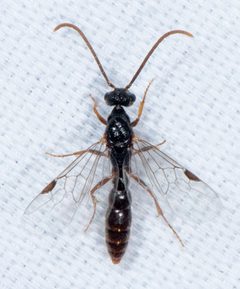
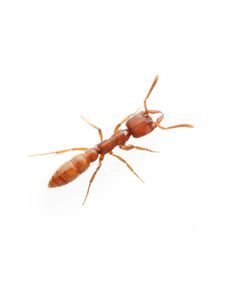
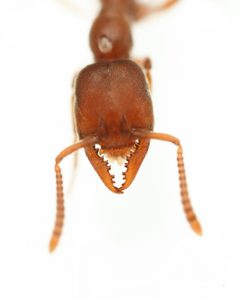
Pronunciation
How to pronounce Stigmatomma pallipes: /stɪɡməˈtɒmə ˈpælɪpiːz/
These audio files are automatically generated. While they are not always 100% accurate, they are a good starting point.
Identification
Small reddish-brown (4.5–6 mm) found in forest floor . Distinguished from other North American ants by its combination of size, coloration, and habitat preference in damp woodland soils. The Stigmatomma can be separated from other Amblyoponinae by mandibular and clypeal characteristics, though -level identification requires detailed examination. Among the three North American Stigmatomma species, S. pallipes has the broadest distribution.
Images
Appearance
A reddish-brown measuring 4.5–6 mm in length. The body is relatively slender with the characteristic of the Amblyoponinae .
Habitat
Wooded areas with damp soil and leaf litter. Nests are located in soil under rocks, rotting logs, or at the base of trees. The requires moist, shaded forest floor conditions.
Distribution
Eastern and southern United States, extending west to California and north to Quebec and Ontario in Canada. Found across most of the eastern deciduous forest region and into western North America.
Life Cycle
Colonies are small, typically containing 2–60 individuals, with larger colonies being uncommon. Detailed information including developmental stages and timing is not documented.
Behavior
Colonies maintain small and are difficult to locate due to their cryptic nesting habits. The is rarely encountered compared to more conspicuous ants.
Human Relevance
Occasionally displayed in entomological exhibits; a live colony was featured at the Bohart Museum of Entomology open house. Not known to be a pest or to have significant economic impact.
Similar Taxa
- Stigmatomma oregonenseAnother North American Stigmatomma ; distinguished by geographic range (western North America) and subtle morphological differences
- Stigmatomma saundersiThe third North American Stigmatomma ; identification requires detailed morphological comparison
More Details
Conservation status
Not formally assessed; the ' cryptic habits and small colonies make monitoring difficult.
Research interest
The belongs to the 'Dracula ' group, named for their habit of feeding on the of their own larvae in some related species, though this has not been specifically documented for S. pallipes.
Sources and further reading
- BugGuide
- Wikipedia
- GBIF taxonomy match
- iNaturalist taxon
- NCBI Taxonomy
- Catalogue of Life
- Colony of Red Ants Roams the Bohart Museum of Entomology | Bug Squad
- The Day That Dragonflies Sprang to Life | Bug Squad
- Six new Dracula ants from Madagascar: Minor workers become queens in Mystrium | Blog
- Secrets of the "Subnivium": Arthropod Community Thrives Beneath Winter Snowpack
- A step back for species-rich grasslands: why removing them from the Sustainable Farming Initiative matters for our endangered invertebrates - Buglife Blog - Buglife
- Conservation Translocations: It’s Not Just Beavers - Buglife Blog - Buglife