
Pentapria
Kieffer, 1905
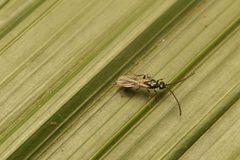
Pentapria is a of minute in the Diapriidae, established by Kieffer in 1905. Members of this genus are part of the diverse Proctotrupomorpha radiation within Hymenoptera. As with other diapriid wasps, in this genus are likely parasitoids of other insects, though specific biological details remain poorly documented. The genus is rarely encountered in field studies and is represented by few observations in citizen science databases.
Pronunciation
How to pronounce Pentapria: //pɛnˈtæpriə//
These audio files are automatically generated. While they are not always 100% accurate, they are a good starting point.
Identification
Identification to requires examination of microscopic morphological features. Diapriid are characterized by a laterally compressed, often strongly ; reduced wing venation with few closed ; and a pronotum that extends posteriorly to the tegulae. Pentapria specifically may be distinguished from related diapriid genera by antennal structure and details of the mesosomal , though definitive identification requires taxonomic keys.
Images
Distribution
The has been recorded from multiple continents, though precise distribution data are sparse. Available records suggest presence in the Palearctic and Nearctic regions, with individual likely having more restricted ranges.
Ecological Role
As members of Diapriidae, in this likely function as of other insects, contributing to of their . The Diapriidae as a whole is known to parasitize larvae of Diptera and other holometabolous insects in soil and decaying organic matter.
Human Relevance
No direct economic or medical importance has been documented. The is of interest primarily to hymenopteran systematists and biodiversity researchers.
Similar Taxa
- DiapriaBoth are in Diapriidae with similar overall body plan; separation requires examination of antennal segmentation and mesosomal structure.
- SpilomicrusAnother diapriid with reduced wing venation; distinguished by differences in capsule shape and pronotal .
More Details
Taxonomic history
The was established by French entomologist Jean-Jacques Kieffer in 1905. Kieffer was a prolific describer of , particularly in the Proctotrupoidea complex, though many of his taxonomic concepts have been subsequently revised.
Data deficiency
The is severely understudied, with few descriptions, limited specimen records in major collections, and minimal biological data. Most information must be inferred from -level characteristics of Diapriidae.