
Kleidotoma
Westwood, 1833
Kleidotoma is a of small in the Figitidae. Members are hyperparasitoids, developing on the larvae of other parasitoid wasps that attack gall-forming insects. The genus occurs primarily in the Holarctic region, with records from northern Europe.
Pronunciation
How to pronounce Kleidotoma: /ˌklaɪdoʊˈtoʊmə/
These audio files are automatically generated. While they are not always 100% accurate, they are a good starting point.
Identification
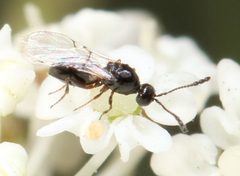
Kleidotoma are minute , generally under 3 mm in length. They possess the reduced wing venation characteristic of many Figitidae, with forewings lacking a distinct pterostigma. The mesosoma is compact and the petiole is short. are with 12–14 segments. Species-level identification requires examination of male genitalia and other microscopic characters.
Images
Habitat
Found in supporting gall-forming insects, particularly on oaks and other woody plants in temperate forests and woodlands.
Distribution
Recorded from Denmark, Norway, and Sweden; broader distribution likely includes other parts of Europe and possibly the Holarctic region based on associations.
Diet
Larvae develop as hyperparasitoids, feeding on the larvae of other (particularly Eurytomidae and Pteromalidae) within plant galls.
Host Associations
- gall-forming insects (indirect) - indirect primary of the that Kleidotoma attacks
- Eurytomidae - larvae within galls
- Pteromalidae - larvae within galls
Ecological Role
Hyperparasitoid that contributes to of primary in gall , potentially influencing gall insect through indirect effects.
Similar Taxa
- FigitesAlso in Figitidae, but Figites are generally larger with more distinct wing venation and different antennal segment counts; Kleidotoma has reduced wing venation and shorter petiole.
- ParnipsAnother figitid hyperparasitoid , but Parnips has different antennal structure and is associated with cynipid galls on roses rather than oak galls.