
Diastrophus kincaidii
Gillette, 1893
thimbleberry gallmaker wasp, thimbleberry gall wasp
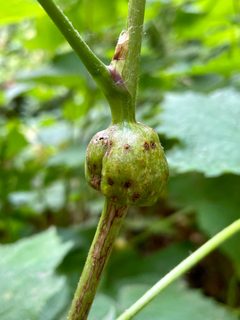
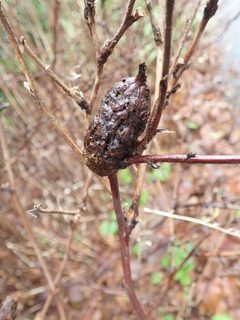
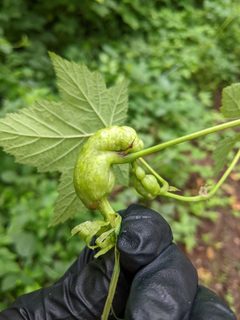
Diastrophus kincaidii is a cynipid that induces integral stem galls on thimbleberry plants (Rubus parviflorus). The galls form the basis of a complex derivative , supporting a weevil and at least nine of parasitic wasps. Females are flightless and exhibit communal oviposition , with multiple females often ovipositing at the same site. Gall shape and size influence rates, with large, round, multilocular galls showing lower frequency than small or narrow galls.
Pronunciation
How to pronounce Diastrophus kincaidii: /daɪˈæstrəfəs kɪnˈkeɪdii/
These audio files are automatically generated. While they are not always 100% accurate, they are a good starting point.
Identification
Distinguished from other Diastrophus by its specific association with thimbleberry (Rubus parviflorus) and the integral stem galls it induces. Galls are multilocular, with size and shape varying based on the number of developing larvae. Large, round galls with many larvae are characteristic and associated with lower rates. Females are flightless, a trait that distinguishes them from many other cynipid .
Images
Habitat
Associated with thimbleberry (Rubus parviflorus) plants, occurring in where this plant grows. Galls form on stems of the host plant.
Host Associations
- Rubus parviflorus - Induces integral stem galls on thimbleberry plants
Life Cycle
Females carry loads exceeding 200 eggs. Oviposition occurs at multiple sites girdling the stem, not at a single insertion point. Communal oviposition has been observed, with up to three females ovipositing simultaneously at the same site. Larvae develop within multilocular galls, with interior larvae experiencing lower rates than peripheral larvae.
Behavior
Females are flightless. Exhibits communal oviposition, with multiple females frequently observed ovipositing at the same site. Oviposition involves multiple insertion sites girdling the stem rather than single-point insertion. These behavioral and anatomical traits have been interpreted as maximizing the probability of forming large, round galls.
Ecological Role
Acts as a gall inducer, creating structure that supports a derivative including at least one weevil and nine parasitic wasp species. The galls provide shelter and food resources for these associated organisms. The arrangement of larvae within galls creates a protective screen, with interior larvae serving as a buffer that reduces of interiormost individuals.
More Details
Parasitism and Gall Structure
frequency varies with gall . Large, round galls containing many cynipid larvae show lower parasite frequency than small or narrow galls with few larvae. The spatial arrangement of larvae within galls provides protection: interiormost larvae are infrequently parasitized, while surrounding larvae may function as a protective screen.
Communal Oviposition
Communal oviposition by multiple females at the same site contributes to the formation of large, multilocular galls. This , combined with high loads and flightlessness, represents distinctive reproductive among cynipid .