
Phylloteras sigma
Phylloteras sigma is a of gall wasp in the Cynipidae. As a member of this family, it is an obligate gall-former on oak trees (Quercus species). The Phylloteras is associated with leaf galls on oaks, and species in this genus induce distinctive galls on oak foliage. Like other Cynipidae, P. sigma has a complex that typically alternates between sexual and , though specific details for this species remain poorly documented.
Pronunciation
How to pronounce Phylloteras sigma: /ˌfɪloʊˈtɛrəs ˈsɪɡmə/
These audio files are automatically generated. While they are not always 100% accurate, they are a good starting point.
Identification
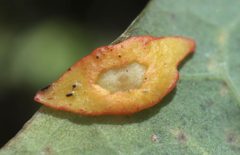
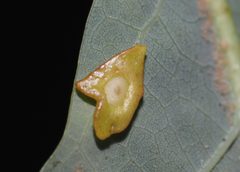
Identification to level requires examination of the induced gall and microscopic analysis of features. Phylloteras species are distinguished from other oak gall wasps by their specific gall structures on oak leaves. Differentiation from congeneric species depends on gall characteristics and fine morphological details of , wing venation, and hypopygium structure in adults. The specific gall induced by P. sigma on oak leaves serves as the primary field identification character.
Images
Appearance
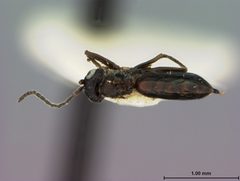
As a small cynipid , Phylloteras sigma likely measures 2-4 mm in body length. Members of the Phylloteras are generally dark-colored wasps with reduced wing venation characteristic of the Cynipidae. The specific epithet "sigma" may refer to markings on the wings or body, though this is speculative without direct observation. Sexual and may differ in , as is common in Cynipidae.
Habitat
Associated with oak-dominated including deciduous woodlands, oak savannas, and forest edges where Quercus occur. The itself occupies the galls it induces on oak leaves; emerge from these galls to mate and oviposit.
Distribution
Documented observations exist in North America based on iNaturalist records, though precise geographic range boundaries are not well established. The Phylloteras has broader distribution in regions with native oak .
Seasonality
timing corresponds with oak leaf , typically spring to early summer for sexual and later summer for generations, following the typical pattern of temperate Cynipidae. Specific phenology for P. sigma is not well documented.
Host Associations
- Quercus - obligate gall formerInduces galls on oak leaves; specific not well documented for P. sigma
Life Cycle
As a cynipid , Phylloteras sigma likely exhibits heterogony—alternation of sexual and parthenogenetic (agamic) . Sexual generation females oviposit into oak leaf tissue, inducing galls where larvae develop. females emerge from these galls and initiate the agamic generation, which may produce galls of different on the same or different oak tissues. Specific details of the for this are not documented.
Behavior
females locate suitable oak leaves and oviposit into leaf tissue, chemically manipulating plant growth to form protective galls. Larvae develop within these galls, feeding on nutritive tissue produced by the plant. Adults are short-lived and primarily focused on and location.
Ecological Role
As a gall-former, Phylloteras sigma modifies oak leaf tissue, creating microhabitats that may be utilized by (guest organisms) and . The galls represent a distinctive form of plant-insect interaction that contributes to biodiversity in oak . The functions as a primary consumer of oak tissue and serves as prey for specialized parasitoid wasps.
Human Relevance
No direct economic or medical significance. The galls induced by Phylloteras may be of interest to naturalists and researchers studying plant-insect interactions, gall , or oak biodiversity. No known use in .
Similar Taxa
- Other Phylloteras speciesCongeneric induce similar leaf galls on oaks; differentiation requires gall examination and morphological analysis
- Other Cynipini genera (e.g., Cynips, Neuroterus)All are oak gall wasps with similar ; distinguished by gall , specificity, and fine structural characters
More Details
Taxonomic Note
The Phylloteras was historically treated as a synonym of Cynips by some authors, but modern taxonomic treatments recognize it as distinct. The specific status and boundaries of P. sigma may benefit from revisionary study.
Research Needs
Basic including precise associations, gall , and details remain undocumented in published literature for this .