
Kokkocynips
Pujade-Villar & Melika, 2013
Species Guides
5- Kokkocynips coxii
- Kokkocynips decidua(oak wheat gall)
- Kokkocynips difficilis
- Kokkocynips imbricariae(Banded Bullet Gall Wasp)
- Kokkocynips rileyi
Kokkocynips is a of gall wasps in the Cynipidae, tribe Cynipini. Originally described as from Mexico in 2013, the genus was substantially expanded through systematic revision to include approximately 8 described , with additional species remaining undescribed. Species occur in the Nearctic and Neotropical regions and are exclusively associated with red oaks (Quercus section Lobatae).
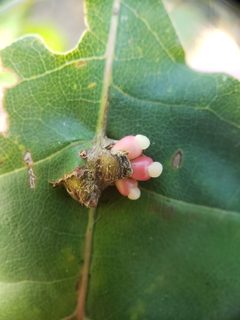
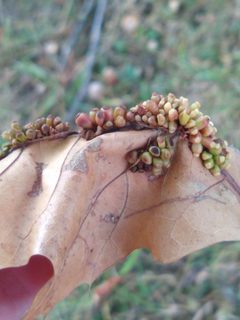
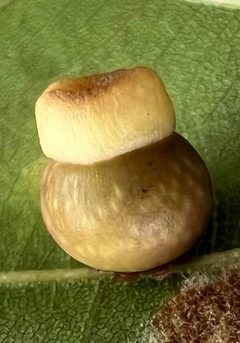
Pronunciation
How to pronounce Kokkocynips: /ˌkɒkkoʊˈsɪnɪps/
These audio files are automatically generated. While they are not always 100% accurate, they are a good starting point.
Images
Habitat
Associated with red oaks (Quercus section Lobatae, Fagaceae).
Distribution
Nearctic and Neotropical regions, ranging from Canada through the United States, Mexico, and Panama.
Host Associations
- Quercus section Lobatae - gall inductionExclusive association; red oaks only
Life Cycle
Includes ; reared from galls on oak .
Behavior
Induces galls on oak foliage and tissues.
Ecological Role
Gall-former that creates plant structures on red oaks, potentially influencing oak growth and providing microhabitats for other organisms.
Similar Taxa
- DryocosmusSix were transferred from Dryocosmus to Kokkocynips based on morphological and molecular phylogenetic evidence; the share gall wasp and oak association but differ in diagnostic characters established in the 2013 revision.
- CallirhytisTwo (C. difficilis and C. attractans) were transferred to Kokkocynips; previously considered congeneric but now separated based on revised taxonomic limits supported by molecular data.
More Details
Taxonomic Revision
The was re-described and expanded in 2021 (Zootaxa 4938: 2.3) to include six Nearctic transferred from Dryocosmus and Callirhytis, plus a new species from Panama (K. panamensis). The type species K. doctorrosae was originally known only from Mexico.
Diagnostic Resources
A key for identification of of seven is available in the primary taxonomic literature.