
Dryocosmus quercuspalustris
(Osten Sacken, 1861)
Succulent Oak Gall Wasp
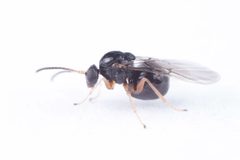
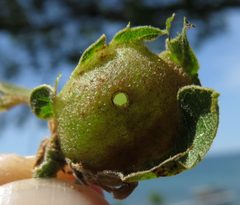
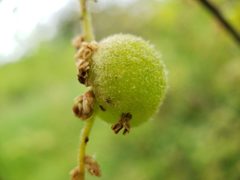
Dryocosmus quercuspalustris, commonly known as the Succulent Oak Gall Wasp, is a of gall wasp in the Cynipidae. The species was described by Osten Sacken in 1861. It induces galls on oak trees, with the specific epithet referencing Quercus palustris (pin oak) as a . The species has been recorded from eastern North America including Canada and the northeastern United States.
Pronunciation
How to pronounce Dryocosmus quercuspalustris: //draɪoʊˈkɒzməs kwɜrkʊsˈpælʌstrɪs//
These audio files are automatically generated. While they are not always 100% accurate, they are a good starting point.
Images
Habitat
Associated with oak trees, particularly pin oak (Quercus palustris), in temperate deciduous forest environments.
Distribution
Eastern North America: recorded from Canada (Ontario, Quebec) and the United States (Vermont).
Host Associations
- Quercus palustris - Gall inductionSpecific epithet suggests primary association; exact gall not specified in available sources.
Behavior
Females insert ovipositor into oak tissue to induce gall formation, based on observed of .
Ecological Role
Gall inducer on oaks; creates plant structures that may serve as microhabitats for other organisms.
Similar Taxa
- Dryocosmus okajimai in same , recently described from Indochina; differs in geographic distribution (Southeast Asia vs. North America).
- Other Cynipidae gall waspsSimilar gall-inducing lifestyle on oaks; identification requires examination of gall and specificity.
More Details
Etymology
The specific epithet 'quercuspalustris' directly references the pin oak (Quercus palustris), indicating the original association described by Osten Sacken.