
Dryocosmus minusculus
Weld, 1952
Pumpkin Gall Wasp
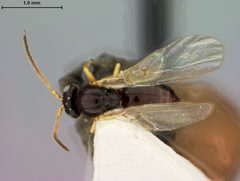
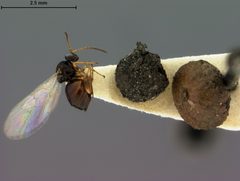
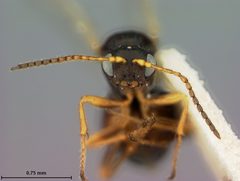
Dryocosmus minusculus is an abundant cynipid to California. The induces small, round galls on oak leaves, commonly called pumpkin galls. emerge in spring after as larvae within galls. The species is strictly associated with three oak species in the region.
Pronunciation
How to pronounce Dryocosmus minusculus: //ˌdraɪoʊˈkɒsməs maɪˈnʌskjʊləs//
These audio files are automatically generated. While they are not always 100% accurate, they are a good starting point.
Identification
The is identified by its distinctive 1 mm round galls on oak leaves, pale with dark centers. It is distinguished from other Dryocosmus species by specificity and gall . Molecular or microscopic examination of may be required for definitive identification.
Images
Habitat
Oak woodlands and forests in California. Strictly associated with oaks: Quercus agrifolia (coast live oak), Quercus wislizenii (interior live oak), and Quercus kelloggii (California black oak).
Distribution
to California, North America. Range corresponds to distribution of oak in the state.
Seasonality
Oviposition occurs in spring and summer. Larvae develop within galls through summer and fall, inside. emerge the following spring.
Host Associations
- Quercus agrifolia - obligate gall induceroviposition on leaves
- Quercus wislizenii - obligate gall induceroviposition on leaves
- Quercus kelloggii - obligate gall induceroviposition on leaves
Life Cycle
Females oviposit into oak leaf tissue in spring and summer. Larval feeding induces gall formation. Larvae complete development within galls, inside. occurs within galls. emerge the following spring to complete the cycle.
Behavior
Females use ovipositor to insert into oak leaf tissue. Larval development triggers localized plant tissue proliferation forming galls. are short-lived and focused on .
Ecological Role
Acts as a gall inducer, manipulating oak leaf tissue for larval development. Provides microhabitat for potential and within galls. Contributes to oak-associated as herbivore.
Human Relevance
No direct economic or medical significance. Of interest to entomologists and naturalists studying gall wasp diversity. Abundant make it a useful study organism for cynipid .
Similar Taxa
- Other Dryocosmus speciesSimilar gall ; distinguished by range, gall size, and geographic distribution
- Other Cynipidae on California oaksMultiple cynipid induce galls on same oaks; microscopic examination or often required for identification
More Details
Abundance
Described as abundant in California, with 3,763+ observations on iNaturalist, indicating it is one of the most commonly encountered cynipid in the region.
Gall appearance
The 'pumpkin gall wasp' derives from the gall's resemblance to small pumpkins: round shape, pale coloration with darker center.