
Callirhytis quercusagrifoliae
(Bassett, 1881)
bud gall wasp
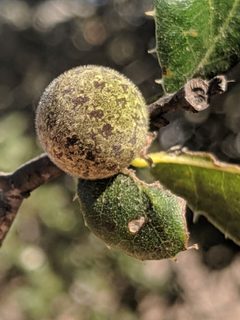
Callirhytis quercusagrifoliae, commonly known as the bud gall wasp, is a cynipid gall wasp that induces galls specifically on the flower buds of coast live oaks (Quercus agrifolia) and interior live oaks (Quercus wislizeni). The has been documented in California, North America. Like other cynipids, it manipulates plant tissue development through chemical secretions to create protective structures for its larvae.
Pronunciation
How to pronounce Callirhytis quercusagrifoliae: /kælɪˈraɪtɪs kwərˌkuːsæɡrɪˈfoʊ.liˌiː/
These audio files are automatically generated. While they are not always 100% accurate, they are a good starting point.
Identification
Distinguished from other Callirhytis by its specific association with flower bud galls on coast and interior live oaks. The galls induced on flower buds differ in location from leaf galls or stem galls produced by related species. Accurate identification typically requires examination of gall , plant species, and gall location on the plant.
Images
Habitat
Associated with oak woodlands and savannas supporting coast live oak or interior live oak. The 's is defined by the presence of its specific plants rather than particular abiotic conditions.
Distribution
Documented in California, North America. Distribution corresponds to the range of its oaks: coast live oak along the California coast and interior live oak in the Sierra Nevada foothills and interior ranges.
Diet
Larvae feed on nutritive plant proliferated within the gall induced on oak flower buds. The feeding habits have not been documented.
Host Associations
- Quercus agrifolia - coast live oak; flower buds
- Quercus wislizeni - interior live oak; flower buds
Behavior
Induces gall formation on flower buds through oviposition and subsequent chemical manipulation of plant tissue. The larva develops within the gall, consuming nutritive produced by the plant. details and whether this exhibits the complex common in cynipids have not been documented.
Ecological Role
As a gall inducer, creates microhabitats that may be utilized by other organisms. The galls represent a form of herbivory that diverts plant resources from normal flower development. Specific or associated with this have not been documented.
Similar Taxa
- Callirhytis quercuspunctataAlso in Callirhytis and induces galls on oaks, but produces gouty oak galls on stems and branches rather than flower bud galls
- Other Callirhytis speciesMany induce galls on oaks but differ in gall location (leaves, stems, buds) and oak specificity
More Details
Gall Location Specificity
The name quercusagrifoliae references Quercus agrifolia (coast live oak), indicating the close taxonomic association with this . The restriction to flower buds rather than leaves or stems distinguishes this species ecologically from many .