
Callirhytis glandulus
(Beutenmüller, 1913)
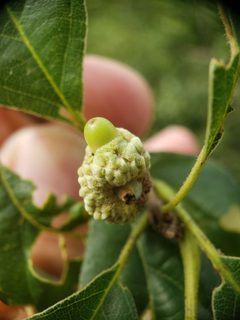
Callirhytis glandulus is a of gall wasp in the Cynipidae. Like other members of the Callirhytis, this species induces the formation of galls on oak (Quercus). The species was described by Beutenmüller in 1913. As with many Cynipidae, it likely exhibits an alternating with distinct sexual and phases that produce different gall morphologies.
Pronunciation
How to pronounce Callirhytis glandulus: //ˌkæl.ɨˈraɪ.tɪs ˈɡlæn.dʊ.ləs//
These audio files are automatically generated. While they are not always 100% accurate, they are a good starting point.
Images
Habitat
Associated with oak-dominated , including forests, woodlands, and areas where oak (Quercus) occur.
Distribution
Native to North America. Specific range details beyond this are not well documented in available sources.
Host Associations
- Quercus - gall inductionSpecific oak not confirmed in available sources; -level association inferred from genus Callirhytis
Ecological Role
As a gall inducer, modifies plant tissue development to create protected microhabitats for larval development. Galls may serve as resources for other organisms including and .
Similar Taxa
- Callirhytis quercuspunctataAlso forms galls on oaks; distinguished by gall and specificity, though precise differences require examination
- Callirhytis clavulaSimilar oak-galling ; galls differ in texture and seasonal timing according to field observations