
Argogorytes
Ashmead, 1899
Species Guides
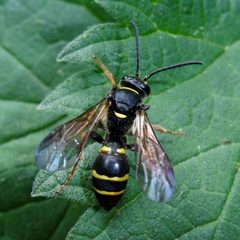
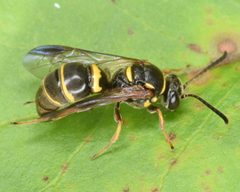
1Argogorytes is a of solitary in the Crabronidae (formerly Bembicidae), comprising 31 described . The genus has a distribution, occurring on all continents except tropical Africa and Antarctica. Members are part of the sand wasp , though specific ecological details for most species remain poorly documented.
Pronunciation
How to pronounce Argogorytes: //ˌɑːrɡoʊˈɡɔːrɪtiːz//
These audio files are automatically generated. While they are not always 100% accurate, they are a good starting point.
Identification
Argogorytes can be distinguished from related gorytine by subtle morphological characters of the and wing venation. The genus is placed in the subtribe Exeirina based on genitalic and larval provisioning characters. Definitive identification to species level typically requires examination of male genitalia and microscopic features.
Images
Distribution
distribution with records from North America, Europe, Asia, Australia, and South America. Absent from tropical Africa and Antarctica. GBIF distribution records confirm presence in Denmark, Norway, and Sweden.
Similar Taxa
More Details
Taxonomic history
Argogorytes was originally described by Ashmead in 1899. The was historically classified in Bembicidae (or Nyssonidae), but modern treatments place it in Crabronidae Bembicinae following phylogenetic revisions of .
Collection holdings
The UCR Entomology Research Museum holds determined specimens of at least two : Argogorytes nigrifrons and Argogorytes sapellonis, among an extensive curated collection of Bembicidae representing 44 of 84 global .