
Didineis
Wesmael, 1852
Species Guides
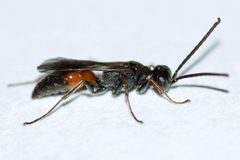
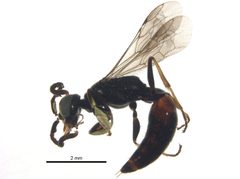
4Didineis is a of solitary predatory in the Crabronidae, Bembicinae, with approximately 24 described worldwide. The genus is placed in the tribe Alyssontini. Species are small, ground-nesting wasps that prey on Auchenorrhynchan Hemipterans, primarily leafhoppers (Cicadellidae) and planthoppers (Fulgoridae). Two species occur in France—D. crassicornis and D. lunicornis—where they have been documented as recurrent inhabitants of agricultural despite historical perceptions of rarity.
Pronunciation
How to pronounce Didineis: /dɪdɪˈneɪɪs/
These audio files are automatically generated. While they are not always 100% accurate, they are a good starting point.
Identification
The two French D. crassicornis and D. lunicornis can be distinguished using , which has been illustrated for both species. A comparative identification table has been developed for rapid field separation of these two species. Beyond France, species-level identification requires reference to specialized taxonomic literature.
Images
Appearance
Small , with French measuring 5–8.5 mm in length. D. crassicornis: 5–8 mm; D. lunicornis: 5.5–8.5 mm. Detailed morphological descriptions of the are limited in available sources.
Habitat
Strongly associated with agricultural , particularly in the northern two-thirds of France. Found in diverse crop types including field crops, vegetable farming, viticulture, and horticulture. Tolerates various soil conditions including disturbed and undisturbed soils, loamy and calcareous substrates. Rarely encountered in natural non-agricultural ; occasionally present in extensive meadows near wetlands. Absent or rare in Mediterranean regions of France.
Distribution
Europe: D. crassicornis recorded from Austria, Bulgaria, Spain, France, Hungary, Italy, Czech Republic, Romania, Russia, Slovakia, Turkey, and Ukraine; D. lunicornis from Germany, England, Austria, Bulgaria, Denmark, Spain, France, Greece, Italy, Luxembourg, Poland, Czech Republic, and Russia. Scandinavian records exist for Denmark, Norway, and Sweden. Global distribution encompasses approximately 24 with highest diversity in Palearctic region.
Seasonality
active June through September in France.
Diet
or Auchenorrhynchan Hemipterans, primarily Cicadellidae (leafhoppers) and Fulgoridae (planthoppers); possibly some Heteroptera.
Host Associations
- Cicadellidae - preyleafhoppers
- Fulgoridae - preyplanthoppers
Life Cycle
Terricole (ground-nesting). Nests excavated in soil. Nesting varies by : D. crassicornis reported as pluricellular by some authors and unicellular by others; D. lunicornis confirmed as unicellular.
Behavior
Strongly associated with agricultural environments and tolerant of soil disturbance. Among the most frequently observed spheciform in agricultural surveys in Beauce and western Gâtinais, France. Can reach high local abundance (up to 46 D. lunicornis and 22 D. crassicornis per trap per season).
Ecological Role
of Auchenorrhynchan Hemipterans including crop pest leafhoppers. Contribute to of potential agricultural pests as part of the spheciform guild in agroecosystems.
Human Relevance
Potential value as agents of crop pest leafhoppers in agricultural systems. No documented negative impacts.
Similar Taxa
Misconceptions
Historically considered rare in France, but extensive surveys (2009–2024) demonstrate that both French are recurrent and sometimes abundant in agricultural of the northern two-thirds of the country.
More Details
Sex ratio variation
D. crassicornis exhibits female-biased sex ratio (0.602 based on trap data), while D. lunicornis shows male-biased captures in traps; these ratios may reflect behavioral rather than true sex ratios.
Taxonomic placement
placement has varied historically: treated as Bembicidae in some sources, Crabronidae in others; currently placed in Crabronidae, Bembicinae, tribe Alyssontini per Catalogue of Life.