
Embolemus nearcticus
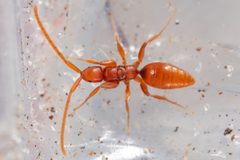
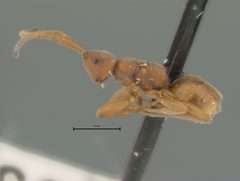
Embolemus nearcticus is a small in the Embolemidae, a group of rarely encountered insects with distinctive wing reduction in females. The is known from very few observations in North America, reflecting both its cryptic habits and the general scarcity of its family. Embolemidae are understudied, and most species are known from scattered records. E. nearcticus contributes to the limited documented diversity of this family in the Nearctic region.
Pronunciation
How to pronounce Embolemus nearcticus: /ɛmˈboʊlɛməs nɪˈɑrktɪkəs/
These audio files are automatically generated. While they are not always 100% accurate, they are a good starting point.
Identification
Females can be recognized by the combination of winglessness, compact body, and placement in Embolemidae (distinguished from other wingless Hymenoptera by antennal structure and body proportions). Males require examination of wing venation and genitalia for -level determination. Separation from other Embolemus species depends on subtle morphological characters not readily assessed from field observation. The family Embolemidae is distinguished from similar groups like Bethylidae by reduced wing venation and other structural features.
Images
Appearance
Females are wingless (), with a compact, -like body form. Males possess wings and have a more typical -like appearance. The body is small, likely under 5 mm based on characteristics. are relatively long and . Coloration details are poorly documented for this specifically.
Habitat
Specific associations are undocumented. Related embolemids have been collected in forested environments, often in leaf litter or soil, suggesting ground-dwelling or hypogeal habits. The wingless condition of females indicates a lifestyle associated with substrates rather than aerial activity.
Distribution
Recorded from the Nearctic region (North America), with observations from the United States. Precise range boundaries are unknown due to limited sampling.
Seasonality
Activity period undocumented due to scarcity of records.
Behavior
Females are ground-dwelling or subterranean based on winglessness. is otherwise unknown for this . members are presumed to be , but specific relationships remain undocumented for most species.
Ecological Role
Likely a , contributing to regulation of potential . The Embolemidae as a whole is poorly understood ecologically.
Human Relevance
None documented. The has no known economic or medical significance.
Similar Taxa
- Other Embolemus speciesRequire detailed morphological examination, particularly of male genitalia and wing venation, for definitive separation.
- Bethylidae (wingless females)Similar -like appearance in females, but distinguished by antennal structure, body proportions, and wing venation in males.
- Formicidae (ants)Wingless females may resemble ants superficially, but lack the metapleural gland, petiole structure, and elbowed characteristic of ants.
More Details
Taxonomic and Collection Status
Embolemus nearcticus is known from only five observations on iNaturalist as of the knowledge cutoff, indicating extreme rarity in biological collections and citizen science records. The Embolemidae contains approximately 70 globally, with most being poorly known. Wingless females are rarely encountered by standard insect collecting methods, contributing to underrepresentation in museums.