
Anteoninae
R.C.L. Perkins, 1907
Genus Guides
3Anteoninae is a large of Dryinidae comprising five extant : Anteon, Deinodryinus, Lonchodryinus, Metanteon, and Prioranteon. Members are of leafhoppers (Cicadellidae), with females possessing forelegs adapted for capturing . Larvae develop externally on host or between and , eventually forming soil-covered cocoons in the ground.
Pronunciation
How to pronounce Anteoninae: //ænˈtiːoʊnɪniː//
These audio files are automatically generated. While they are not always 100% accurate, they are a good starting point.
Identification
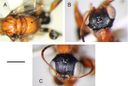
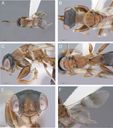
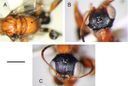
Distinguished from other Dryinidae by combination of: fully winged condition (occasionally brachypterous), forewing with three enclosed (costal, , submedian) bordered by pigmented , quadridentate with graduated tooth size, complete occipital carina, and specific palpal segmentation (6 maxillary, 3 labial). Females further identified by flat pronotum, short broad foretrochanters, and chelate foretarsus without or teeth on enlarged claw. Anteoninae females lack the claw present in some other dryinid subfamilies.
Images
Appearance
typically fully winged, occasionally brachypterous. Forewing with costal, , and submedian clearly enclosed by pigmented . quadridentate with teeth progressively larger from to . Maxillary palpi with 6 segments, labial palpi with 3 segments. Occipital carina complete. Tibial spurs: 1 (fore), 1 (mid), 2 (hind). Females with flat pronotal surface, short broad foretrochanters, and chelate foretarsus lacking claw; enlarged claw without teeth or . Mature larvae with very long setae on body and ; with few long sensory bristles, two sensory pits, and row of sensory bristles; with two ; subtriangular with narrow subquadrate ; bulb-shaped of approximately equal size in and . larvae possess frontal "mask" covering frontal region, lack cephalic vesicles, and have posterior body region strongly bent ventrally.
Habitat
Terrestrial environments where leafhopper occur. Larval cocoons constructed in soil and covered with soil particles.
Distribution
distribution including: South Korea; Brazil (Bahia, Minas Gerais, Paraná); Mexico (Chiapas); and broadly across Neotropical, Palearctic, and other regions. Precise range varies by and .
Host Associations
- Cicadellidae - confirmed ; larvae develop externally on host or between and
Life Cycle
Development includes last stage and mature larva. Immature larvae attach to on or between and . Mature larvae form cocoons in ground covered with soil particles. Complete (holometabolous) inferred from -level .
Behavior
larvae consistently position on or between and , with body region strongly bent ventrally. Females use chelate forelegs to capture and hold leafhopper hosts during oviposition. Cocoon construction involves soil incorporation.
Ecological Role
Primary of leafhoppers (Cicadellidae), contributing to of these herbivorous insects. May influence leafhopper dynamics and indirectly affect plant damage levels.
Human Relevance
Potential agents for leafhopper pests in agricultural systems, though specific applications not documented in provided sources.
Similar Taxa
- GonatopodinaeAnother large of Dryinidae also parasitic on Auchenorrhyncha; distinguished by forewing venation patterns, , and female foreleg structure including presence of claw in many
- AphelopinaeSmaller Dryinidae with reduced wing venation and different larval attachment sites on
More Details
Taxonomic composition
Five extant recognized: Anteon (largest and most widespread), Deinodryinus, Lonchodryinus, Metanteon, and Prioranteon. Two fossil genera also known.
Larval morphology significance
Detailed larval characters including frontal "mask," body setation, and structure provide important phylogenetic and taxonomic information for classification.
Sources and further reading
- BugGuide
- iNaturalist taxon
- NCBI Taxonomy
- Larval morphology of three species of Anteoninae (Hymenoptera, Dryinidae)
- Taxonomic Study of the subfamily Anteoninae R.C.L Perkins (Hymenoptera: Dryinidae) from South Korea.
- Contribution to the knowledge of the Neotropical Anteoninae (Hymenoptera, Dryinidae), with the descriptions of two new species and new records