Parnopes
Latreille, 1797
cuckoo wasps, ruby-tailed wasps, emerald wasps
Species Guides
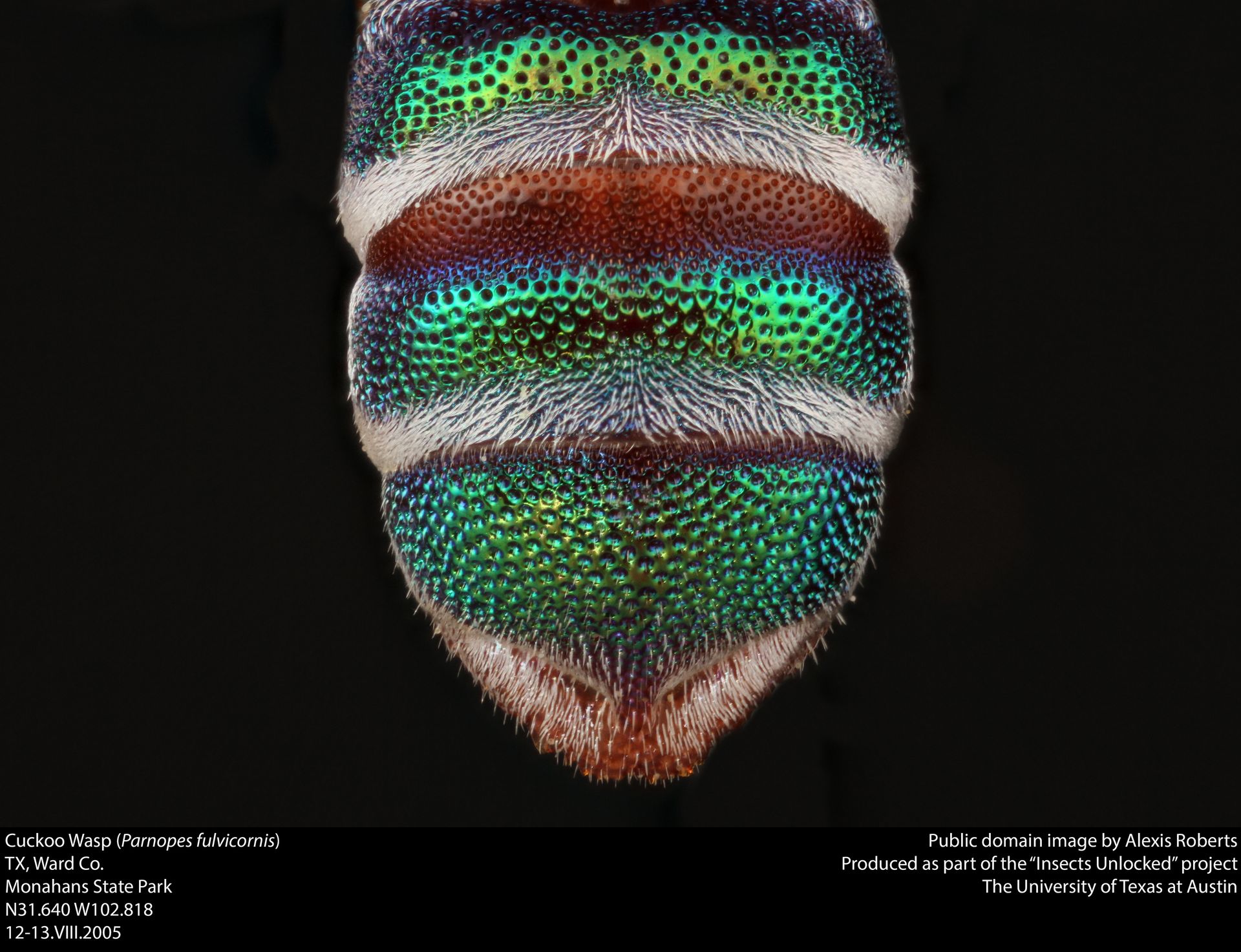
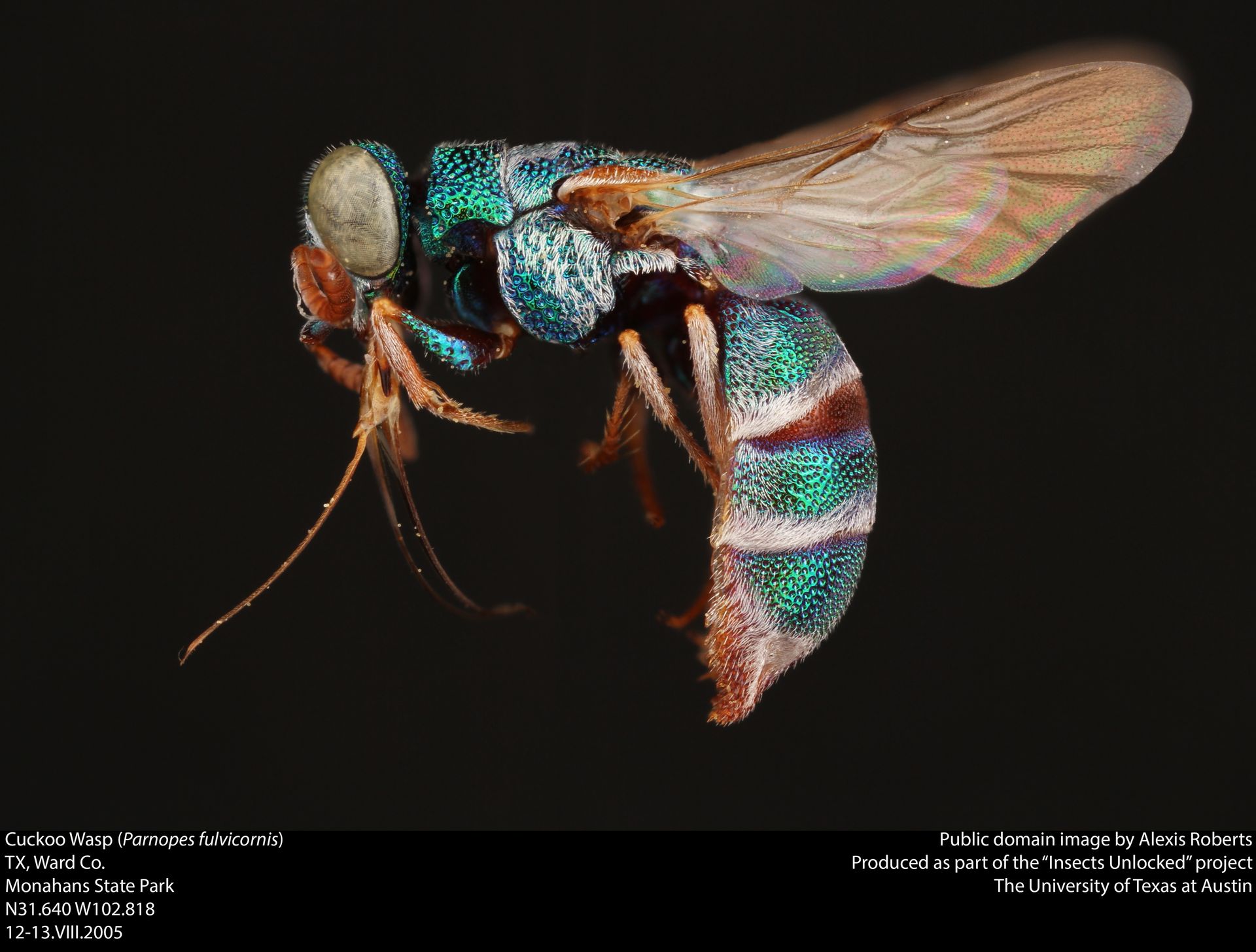
3Parnopes is a of cuckoo wasps in the Chrysididae, constituting the sole genus of the tribe Parnopini. These are that lay in the nests of solitary wasps, primarily sand wasps in the family Bembicidae. The genus exhibits weak chemical mimicry of cuticular hydrocarbon profiles to reduce detection during nest invasion. Approximately seven to sixteen have been described, with distributions spanning Europe, Asia, North Africa, and North America.
Pronunciation
How to pronounce Parnopes: /ˈpɑrnoʊˌpiːz/
These audio files are automatically generated. While they are not always 100% accurate, they are a good starting point.
Identification
Members of Parnopes can be distinguished from other chrysidid by their placement in the tribe Parnopini, though specific diagnostic morphological features for the genus are not detailed in available sources. Like other cuckoo wasps, they possess a heavily sculptured, brilliantly metallic that provides armor against stings.
Images
Habitat
Dry, sunny sites with sandy substrate; natural include dry heathlands, inland sandy grasslands, xerothermic grasslands, forest glades, and dry hay meadows. Anthropogenic habitats include sand quarries, military training grounds, abandoned arable land, deforested patches, and urban wastelands. Sites with large consistently contain large amounts of dead wood and bare sandy patches among herbaceous vegetation with less than 20% plant coverage.
Distribution
Europe (including France, Spain, Poland, Belarus, Russia), Asia (India), North Africa (Madagascar), and North America (western United States and Canada). In Europe, expanding north-westwards in Poland from previously restricted ranges; in Russia, abundance increases significantly south of the Ulyanovsk region in the Volga River Basin.
Seasonality
active during warmer months; of adults from nests occurs the following spring after as larvae or pupae.
Diet
feed on nectar from flowers including Armeria maritima, Thymus serpyllum, and potentially Scabiosa and Euphorbia .
Host Associations
- Bembix rostrata - nest Primary in European ; present at all documented study sites in Poland and Russia
- Bembix merceti - nest Confirmed potential based on nest visitation and fighting in Spain
- Bembix sinuata - nest Confirmed with observed in Spain
- Bembix zonata - nest Confirmed with observed in Spain
- Bembix species - nest At least 10 recorded as -wide; weak host specialization documented
- Steniolia elegans - nest Parnopes edwardsii specifically documented as of this in western North America
Life Cycle
Females oviposit in nests during host provisioning . Larvae develop within host , consuming host , larvae, and stored food provisions. Development completes with from excavated cells the following spring.
Behavior
Females patrol nest and attempt to enter nests while host females are away foraging. Exhibits weak chemical mimicry of host cuticular hydrocarbon profiles, with CHC profiles more similar to sympatric Bembix hosts than to non-host but equally distant to all host species rather than locally adapted to any single host. This weak mimicry is sufficient to reduce host aggression during nest invasion. Host females can detect Parnopes and may abandon parasitized nests. Fighting outside nests has been observed with host species.
Ecological Role
(natural enemy) of solitary sand wasps. Acts as for open, sunny with sandy substrates. Anthropogenic habitats may serve as refugia, substitute habitats, and corridors in fragmented landscapes, potentially maintaining of threatened .
Human Relevance
Subject of conservation concern in parts of Europe due to rarity and loss; previously considered near extinction in Poland before recent range expansion. Parnopes grandior featured in a 5×6-foot microsculpture photograph by Levon Biss displayed at the Bohart Museum of Entomology, honoring the work of chrysidid Richard M. Bohart.
Similar Taxa
- Other Chrysididae generaParnopes is distinguished as the sole in tribe Parnopini; other cuckoo wasp genera belong to different tribes and may differ in specificity, chemical mimicry strategies, and geographic distribution
- CleptesAnother of cuckoo wasps; differs in associations and tribal placement (Cleptini vs. Parnopini)
More Details
Chemical mimicry and host specialization
Research on Parnopes grandior demonstrates that low specialization correlates with weaker chemical mimicry. Unlike host- cuckoo wasps that precisely match single host CHC profiles, P. grandior exhibits generalized weak mimicry effective against multiple sympatric Bembix hosts without local to any one host . This represents a different evolutionary strategy in the chemical deception arms race between and their hosts.
Conservation status and anthropogenic habitats
Parnopes grandior exemplifies complex conservation dynamics: the has expanded its range in northern Poland by colonizing anthropogenic such as sand quarries and military training grounds. These disturbed sites serve as substitute habitats and corridors, though their long-term viability remains uncertain. The species can persist in heavily disturbed sites including those affected by industrial activities.
Sources and further reading
- BugGuide
- Wikipedia
- GBIF taxonomy match
- iNaturalist taxon
- NCBI Taxonomy
- Picture This: A 5x6-Foot Ruby-Tailed Wasp at Bohart Museum | Bug Squad
- 'Giving Tuesday': Giving Back to the Bohart Museum of Entomology | Bug Squad
- Bug Eric: Wasp Wednesday: Steniolia elegans
- Bug Eric: August 2010
- Distribution, abundance, and habitats of rare species Parnopes grandior (Pallas 1771) (Hymenoptera, Chrysididae) in Mordovia and adjacent regions, Russia
- Low Host Specialization in the Cuckoo Wasp, Parnopes grandior, Weakens Chemical Mimicry but Does Not Lead to Local Adaption
- New data on the distribution of Parnopes grandior (Pallas, 1771) (Hymenoptera: Chrysididae) in northern Poland: habitat conditions propitious to this rare cuckoo-wasp species