
Chrysidini
Genus Guides
8- Argochrysis(cuckoo wasps)
- Caenochrysis
- Ceratochrysis
- Chrysis(cuckoo wasps)
- Chrysura(cuckoo wasps)
- Chrysurissa
- Exochrysis
- Pseudochrysis
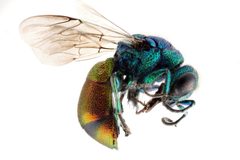
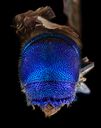
Chrysidini is the largest tribe of cuckoo wasps ( Chrysididae), comprising more than half of all chrysidid . Members are or that target solitary and bees, exhibiting a high degree of specialization. Research in Estonia demonstrated that different Chrysidini species show minimal host overlap, contradicting earlier assumptions of .

Pronunciation
How to pronounce Chrysidini: //ˌkrɪsɪˈdaɪnaɪ//
These audio files are automatically generated. While they are not always 100% accurate, they are a good starting point.
Images
Habitat
Trap-nesting studies in Estonia utilized reed stem bundles placed across 361 locations, indicating these occupy diverse terrestrial where solitary wasp and construct nests. Argentine research documents presence in agro-.
Distribution
Estonia (361 locations across country, 2009-2011); Argentina (agro-). Global distribution implied by large , though specific range data not extracted from sources.
Seasonality
Observations in Estonia span vegetation periods 2009-2011; no specific seasonal activity patterns documented in provided sources.
Host Associations
- solitary wasps - (/)primary for Chrysidini
- bees - (/)primary for Chrysidini
- mason wasps - (/)documented - relationships in trap-nest studies
Behavior
High specialization with minimal overlap between ; contrary to previous assumptions of unspecialized . Parasitic involves entering host nests to deposit ; trap-nest order analysis used to document timing.
Ecological Role
or of solitary and bees; narrow specialization linked to high in cuckoo wasps.
Misconceptions
Previously assumed to be unspecialized ; empirical trap-nest research in Estonia demonstrated significant specificity with minimal host overlap between .
Sources and further reading
- BugGuide
- Wikipedia
- iNaturalist taxon
- NCBI Taxonomy
- Bug Eric: City Nature Challenge 2024 Recap
- Host specificity of the tribe Chrysidini (Hymenoptera: Chrysididae) in Estonia ascertained with trap-nesting
- Host–parasite relationships and life cycles of cuckoo wasps in agro-ecosystems in Argentina (Hymenoptera: Chrysididae: Chrysidini)