
Dissomphalus
Ashmead, 1893
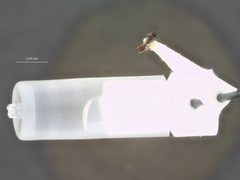
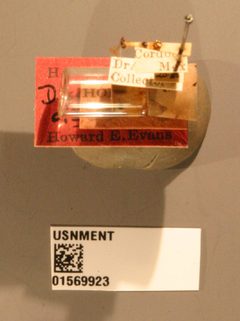
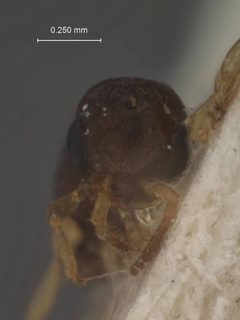
Dissomphalus is the most -rich in the Bethylidae (Hymenoptera), with over 600 valid species globally. The genus exhibits exceptional diversity in the Neotropical region, where the majority of species occur, though it has a distribution including the Oriental region and southwestern Pacific islands. Species delimitation relies heavily on male genitalia characters and metasomal tergal process structures, with species-groups defined primarily by these morphological features. Taxonomic revisions have revealed high levels of undescribed diversity, particularly in underexplored regions such as Panama, Thailand, and the Fiji-Solomon Islands archipelago.
Pronunciation
How to pronounce Dissomphalus: //dɪˌsɒmˈfæləs//
These audio files are automatically generated. While they are not always 100% accurate, they are a good starting point.
Identification
identification within Dissomphalus requires examination of male genitalia and metasomal tergal process structures. The hypopygium shape has been demonstrated to serve as a species-specific diagnostic character when combined with molecular data. Species-groups are organized based on the configuration of metasomal tergal processes, particularly the presence, number, and arrangement of and foveae on the tergites. For example, the vallensis species-group is characterized by two tubercles mesad located in a subcircular or elliptical fovea with tufts of setae in the lateral region of the depression. Females are generally unknown or difficult to associate with males, making species-level identification challenging without properly sexed specimens.
Images
Distribution
distribution with highest diversity in the Neotropical region, where the majority of occur. Documented from Panama (64 species), Brazil, and broadly across the Neotropical region. Present in the Oriental region including Thailand (29 species). Recorded from the southwestern Pacific, including Fiji (25 species) and Solomon Islands (2 species). Some species exhibit broad distributions: D. bifurcatus has the largest distribution in the Neotropical region, while others are narrowly to islands or specific localities.
Similar Taxa
- Other Bethylidae generaDissomphalus is distinguished from other bethylid by its characteristic metasomal tergal process structures and male genitalia ; the genus is uniquely defined by combinations of and fovea configurations on the metasomal tergites that are not found in other genera within the .
More Details
Taxonomic challenges
Sympatric in the ulceratus species-group, such as D. rectilineus and D. concavatus, have historically posed identification challenges due to intermediate hypopygium structures in contact zones. using oxidase I (COI) sequences supports species delimitation, with interspecific divergences of approximately 19% between these species. A third, undescribed cryptic species has been detected through combined molecular and morphological analysis in the Atlantic rainforest of Brazil and Paraguay.
Species diversity
The contains 639 valid globally as of recent revisions, with 269 Neotropical species organized into 32 species-groups. The rate of species discovery remains high: 31 new species described from Panama alone, 24 from Thailand, 15 from the vallensis species-group revision, and 27 from Fiji and Solomon Islands, indicating substantial undescribed diversity persists in undercollected regions.
Sources and further reading
- BugGuide
- GBIF taxonomy match
- iNaturalist taxon
- NCBI Taxonomy
- Review of Dissomphalus Ashmead (Hymenoptera, Bethylidae) from Panama, with key to the Central American species
- Revision of the Neotropical vallensis species-group (Hymenoptera, Bethylidae, Dissomphalus), with the discovery of fifteen new species
- Revision of Thai <i>Dissomphalus</i> Ashmead, 1893 (Hymenoptera, Bethylidae), with description of twenty four new species
- DNA barcoding and hypopygium shape support delimitation of sympatric Dissomphalus species (Hymenoptera, Bethylidae) from the Atlantic rainforest
- Taxonomy of Dissomphalus Ashmead (Hymenoptera, Bethylidae) from Fiji and Solomon Islands, with Description of Twenty-Seven New Species