
Perilampus fulvicornis
Ashmead, 1886
Perilampus fulvicornis is a small in the Perilampidae, first described by Ashmead in 1886. The exhibits the characteristic perilampid of hyperparasitism, with larvae developing as of other parasitic insects. are known for their compact size and often brilliant metallic coloration typical of the family. The species has been recorded across a broad geographic range in North America.
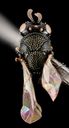
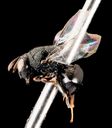
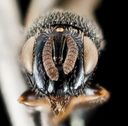
Pronunciation
How to pronounce Perilampus fulvicornis: /ˌpɛrɪˈlæmpəs ˌfʊlvɪˈkɔrnɪs/
These audio files are automatically generated. While they are not always 100% accurate, they are a good starting point.
Images
Distribution
Recorded from British Columbia, California, Colorado, Delaware, and District of Columbia. The occurs across a broad latitudinal range in western and eastern North America, suggesting adaptability to varied climatic conditions.
Ecological Role
As a member of Perilampidae, likely functions as a hyperparasitoid in , potentially regulating of primary and their . The specific host relationships for this have not been documented.
Similar Taxa
- Chrysididae (cuckoo wasps)Similar small size, metallic coloration, and association with colonies or extrafloral . Distinguished by oval or rounded without sharp corners, versus the triangular or inverted pyramid-shaped abdomen of Perilampidae; also differs in structure.
- PteromalidaeHistorically confused with Perilampidae in classification; both are small chalcidoid wasps. Perilampidae distinguished by short, strongly elbowed and characteristic abdominal shape.