
Ooderidae
Bouček, 1958
Genus Guides
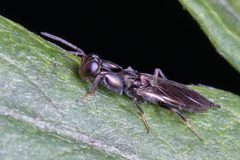
1Ooderidae is a of chalcidoid wasps containing the single Oodera. These are of wood-boring beetles, primarily in the families Buprestidae and Curculionidae. They are rarely collected using standard entomological methods and remain poorly known biologically.
Pronunciation
How to pronounce Ooderidae: /oʊˈdɛrɪˌdaɪ/
These audio files are automatically generated. While they are not always 100% accurate, they are a good starting point.
Identification
Ooderidae can be distinguished from other Chalcidoidea by the combination of: a distinct pronotal collar, elongated mesosoma, and reduced wing venation with a single closed . The family is further characterized by with 11–13 segments and a laterally compressed . Separation from the morphologically similar family Agaonidae requires examination of the ovipositor structure and male genitalia.
Images
Distribution
Warm regions of the Palearctic, Afrotropical, and Indomalayan biogeographic realms. The single introduced of Oodera formosa occurs in the Nearctic region (North America).
Host Associations
- Buprestidae - larvae
- Curculionidae - larvae
Behavior
are rarely collected by standard Chalcidoidea sampling methods including , sweep nets, and pan traps. This suggests specialized -finding or activity patterns that differ from typical chalcidoid wasps.
Ecological Role
of beetles; likely contribute to regulation of wood-boring in forest .
Human Relevance
Oodera formosa has been intentionally introduced outside its native range, presumably for of wood-boring pests.
Similar Taxa
- AgaonidaeSimilar body plan and reduced wing venation; distinguished by ovipositor structure and male genital
- PteromalidaeOverlaps in general chalcidoid ; Ooderidae separated by pronotal collar structure and mesosomal proportions
More Details
Taxonomic history
Established as a by Bouček in 1958 based on distinctive morphological features separating Oodera from other chalcidoid groups.
Collection challenges
The rarity of specimens in standard collections suggests that targeted sampling methods, such as rearing from infested wood, may be necessary for adequate study.