
Cosmocomoidea
Howard, 1908
Species Guides
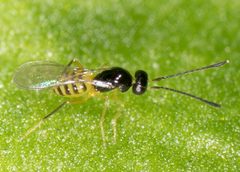
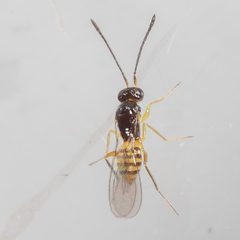
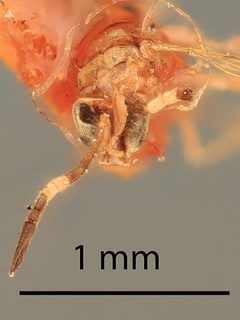
3Cosmocomoidea is a of fairyflies (Mymaridae) established by Howard in 1908. within this genus are solitary primarily associated with leafhoppers (Cicadellidae: Cicadellinae), which are of plant including Xylella fastidiosa. The genus has been documented from Asia (China, Taiwan, Japan, India), Europe (Denmark, Sweden), and South America, with C. annulicornis being the most extensively studied species due to its potential as a agent.
Pronunciation
How to pronounce Cosmocomoidea: /ˈkɔz.moˌkoɪ.di.a/
These audio files are automatically generated. While they are not always 100% accurate, they are a good starting point.
Images
Habitat
have been recorded from organic kiwifruit orchards, organic vineyards, and commercial citrus orchards. The is associated with agricultural and semi-natural environments where leafhoppers occur on diverse plant substrates including citrus, johnsongrass, and grapevines.
Distribution
Recorded from Asia (mainland China: Fujian; Taiwan; Japan: Yamanashi Prefecture, Honshu Island; India), Europe (Denmark, Sweden), and South America. Distribution is likely broader but undersampled due to small size and specialized collecting requirements.
Host Associations
- Bothrogonia ferruginea - Hemiptera: Cicadellidae: Cicadellinae; apparent based on rearing from kiwifruit leaves
- Kolla paulula - Hemiptera: Cicadellidae: Cicadellinae
- Tapajosa rubromarginata - Hemiptera: Cicadellidae; primary studied of C. annulicornis, of Citrus Variegated
Life Cycle
Solitary development. In C. annulicornis, success and developmental time vary with egg age, with sharply decreasing parasitism in older host eggs and shorter developmental times for hosts 120–144 hours old. Embryogenesis of the host begins approximately 48 hours after oviposition.
Behavior
Females use volatile chemical cues to locate at long range, detecting common plant volatiles such as indole and β-caryophyllene emitted by taxonomically distant host plants after herbivore damage. do not discriminate between fresh and older host eggs based on olfactory cues alone, nor between healthy eggs and those previously parasitized by conspecifics. Final oviposition decisions likely involve more specific contact cues once on the plant.
Ecological Role
agent of leafhoppers, which are of Xylella fastidiosa and other plant causing economically important in citrus, grapevines, and other crops.
Human Relevance
in this , particularly C. annulicornis, have been evaluated for programs targeting of plant in citrus orchards and vineyards.
Sources and further reading
- BugGuide
- GBIF taxonomy match
- iNaturalist taxon
- NCBI Taxonomy
- Catalogue of Life
- Publications | Entomology Research Museum
- A new record of the fairyfly Cosmocomoidea tenuis (Hymenoptera: Mymaridae) from Japan, with notes on its host associations
- Description of a new species of Cosmocomoidea Howard (Hymenoptera: Chalcidoidea) from India, key to species and other distributional records
- Performance and host finding behavior in relation to host age of Cosmocomoidea annulicornis, egg parasitoid of a sharpshooter vector of the citrus variegated chlorosis
- Ovigeny strategy of the parasitic wasp Cosmocomoidea annulicornis (Hymenoptera: Mymaridae): effect of female age, feeding and host availability on reproductive traits
- Biological traits of Cosmocomoidea annulicornis (Hymenoptera: Mymaridae), an egg parasitoid of the sharpshooter Tapajosa rubromarginata (Hemiptera: Cicadellidae), a vector of Xylella fastidiosa in citrus orchards
- Behavioral Response of The Egg Parasitoid Cosmocomoidea Annulicornis (Hymenoptera: Mymaridae) and Characterization of The Chemical Cues That Guide Females Toward Host Eggs Located In Taxonomically Distant Plants Species