
Metapelmatidae
Bouček, 1988
Subfamily Guides
1Metapelmatidae is a small of parasitic in the superfamily Chalcidoidea, containing the single Metapelma. These wasps are specialized of longhorn beetle (Cerambycidae) larvae, which bore into wood. The family was established by Bouček in 1988 based on distinctive morphological features that separate it from other chalcidoid families.
Pronunciation
How to pronounce Metapelmatidae: //ˌmɛtəpɛlˈmætɪdiː//
These audio files are automatically generated. While they are not always 100% accurate, they are a good starting point.
Identification
Distinguished from other Chalcidoidea by the unique combination of pronotal and mesosomal characters established by Bouček. The single- nature of the family means identification to family level requires recognition of Metapelma genus characteristics, including specific antennal segmentation and wing venation patterns that differ from other chalcidoid families such as Eupelmidae or Pteromalidae.
Images
Appearance
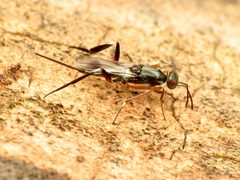
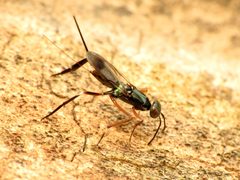
Small chalcidoid wasps with reduced wing venation and characteristic antennal structure. The exhibits morphological traits including a distinct pronotal structure and modified mesosoma that distinguish it from related families within Chalcidoidea. Body size is minute to small, consistent with other chalcidoid wasps.
Habitat
Associated with woody where longhorn beetle larvae occur. Found in forests and woodlands containing dead or dying wood that supports cerambycid .
Distribution
Distribution follows that of the Metapelma; records indicate presence in multiple regions but precise global range is poorly documented due to rarity and specialized collecting requirements.
Host Associations
- Cerambycidae - Larvae of longhorn beetles are the known ; parasitize wood-boring larvae
Ecological Role
Acts as a agent for longhorn beetle , regulating cerambycid densities in forest through of larval stages.
Similar Taxa
- EupelmidaeBoth belong to Chalcidoidea and share reduced wing venation, but Metapelmatidae differs in pronotal structure and antennal
- PteromalidaeAnother large chalcidoid with superficial similarities, but distinguished by mesosomal and antennal characteristics unique to Metapelmatidae
More Details
Monotypic family
Metapelmatidae is one of the few within Chalcidoidea, containing only the Metapelma. This rarity reflects both highly specialized associations and distinctive morphological evolution.
Taxonomic history
The was separated from related groups by Czech entomologist Zdeněk Bouček based on detailed morphological study, highlighting the importance of fine- anatomical examination in chalcidoid .