
Eutrichosoma
Ashmead, 1899
Species Guides
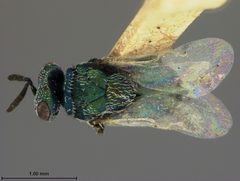
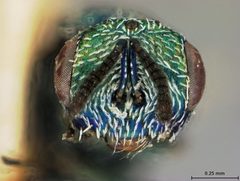
1Eutrichosoma is a of in the Eutrichosomatidae (Chalcidoidea). The genus is notable for its planidial first-instar larvae—highly mobile, -seeking forms that actively locate hosts rather than being deposited directly on or in them. At least two are recognized: E. mirabile Ashmead and E. burksi Baker & Heraty. The Eutrichosomatinae belongs to the Planidial Larva Clade within Chalcidoidea.

Pronunciation
How to pronounce Eutrichosoma: //juːˌtrɪk.oʊˈsoʊ.mə//
These audio files are automatically generated. While they are not always 100% accurate, they are a good starting point.
Identification
The is distinguished from other chalcidoid genera by its placement in the Planidial Larva Clade, characterized by first-instar larvae with specialized for active -seeking. A key to of Eutrichosoma has been published. are small chalcidoid wasps; specific diagnostic features for the genus require examination of morphological characters detailed in taxonomic revisions.
Images
Habitat
Associated with plants of weevil hosts; field collections of E. mirabile were made from whitethorn acacia (Vachellia constricta).
Distribution
Southeastern Arizona, USA (documented for E. mirabile from field collections in August 2016 and 2018). Broader geographic range for the is poorly documented.
Seasonality
activity documented in August in southeastern Arizona.
Host Associations
- weevils (Coleoptera: Curculionidae) - identity confirmed via 28S-D2 rDNA and COI-BC mtDNA sequences; , , and unconfirmed
- whitethorn acacia (Vachellia constricta) - indirect plant of weevil hosts
Life Cycle
First-instar larvae are —highly mobile, sclerotized larvae adapted for active -seeking. Larval has been described for E. mirabile. Subsequent instars and pupal development occur within the host.
Behavior
First-instar larvae actively seek out weevils rather than being deposited directly on or in hosts. This planidial strategy represents an alternative to typical oviposition .
Ecological Role
of weevil larvae (Curculionidae), with potential as a agent.
Human Relevance
Potential for of weevil pests; however, specific applications have not been documented.
Similar Taxa
- other Pteromalidae (sensu lato)Eutrichosoma was historically placed in Pteromalidae but is now recognized in the distinct Eutrichosomatidae; distinguished by planidial larval and phylogenetic placement in the Planidial Larva Clade
- other planidial chalcidoids (e.g., Perilampidae, Eucharitidae, some Encyrtidae)Share the planidial larval strategy but differ in associations, , and phylogenetic placement within Chalcidoidea
Sources and further reading
- BugGuide
- GBIF taxonomy match
- iNaturalist taxon
- NCBI Taxonomy
- Catalogue of Life
- Larval morphology and life history of Eutrichosoma mirabile Ashmead and description of a new species of Eutrichosoma (Hymenoptera, Chalcidoidea)
- Figure 3 from: Baker AJ, Heraty JM (2020) Larval morphology and life history of Eutrichosoma mirabile Ashmead and description of a new species of Eutrichosoma (Hymenoptera, Chalcidoidea). Journal of Hymenoptera Research 75: 67-85. https://doi.org/10.3897/jhr.75.47880
- Supplementary material 1 from: Baker AJ, Heraty JM (2020) Larval morphology and life history of Eutrichosoma mirabile Ashmead and description of a new species of Eutrichosoma (Hymenoptera, Chalcidoidea). Journal of Hymenoptera Research 75: 67-85. https://doi.org/10.3897/jhr.75.47880
- Figure 1 from: Baker AJ, Heraty JM (2020) Larval morphology and life history of Eutrichosoma mirabile Ashmead and description of a new species of Eutrichosoma (Hymenoptera, Chalcidoidea). Journal of Hymenoptera Research 75: 67-85. https://doi.org/10.3897/jhr.75.47880
- Figure 2 from: Baker AJ, Heraty JM (2020) Larval morphology and life history of Eutrichosoma mirabile Ashmead and description of a new species of Eutrichosoma (Hymenoptera, Chalcidoidea). Journal of Hymenoptera Research 75: 67-85. https://doi.org/10.3897/jhr.75.47880