
Eutrichosomatidae
Peck, 1951
Subfamily Guides
1Eutrichosomatidae is a of chalcid wasps containing three : Eutrichosoma, Peckianus, and Collessina. The family was originally described in 1951, demoted to a of Pteromalidae in 1974, and reinstated as a family in 2022. First instar larvae are active that parasitize developing seed-feeding weevils.
Pronunciation
How to pronounce Eutrichosomatidae: /juːˌtrɪkoʊˈsoʊmətɪˌdiː/
These audio files are automatically generated. While they are not always 100% accurate, they are a good starting point.
Identification
Distinguished from other chalcidoid by their planidial first instar larvae and association with weevil . The three can be separated by geographic distribution: Eutrichosoma and Peckianus occur in the New World, while Collessina is restricted to Australia.
Images
Appearance
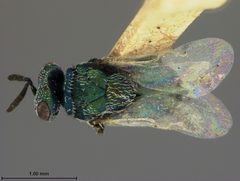
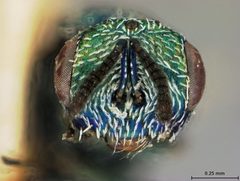
Bodies are black or metallic. Some are covered in white hairs.
Distribution
New World (Eutrichosoma and Peckianus); Australia (Collessina). Records exist from Paraná, Brazil; Queensland, Australia; and Arkansas, USA.
Diet
of developing seed-feeding weevils (Curculionidae).
Host Associations
- seed-feeding weevils - First instar larvae are active that attach to weevil larvae
Life Cycle
First instar larvae are active capable of locomotion. are laid adjacent to or away from weevil eggs, and larvae must actively move to attach to weevil larvae. Larvae retain locomotor ability until the pupates, allowing reattachment during host .
Behavior
Larvae exhibit active -seeking , moving to locate and attach to suitable weevil hosts.
Ecological Role
agent of seed-feeding weevils.
Similar Taxa
- PerilampidaeShares planidial larval characteristics; placed in the same clade based on larval
- EucharitidaeShares planidial larval characteristics; placed in the same clade based on larval
- PteromalidaeHistorically treated as a of Pteromalidae (1974–2022); distinguished by planidial larvae and weevil association
More Details
Taxonomic history
Originally described as a in 1951, demoted to Eutrichosomatinae within Pteromalidae in 1974, and elevated back to family status in 2022 based on phylogenetic evidence.
Etymology
Peckianus and Collessina are named after Dr. Oswald Peck and D.H. Colless, respectively.
Species diversity
The contains approximately 5 : Eutrichosoma (3 species), Peckianus (1 species), and Collessina (1 species). Some sources include the Manineura.