
Elasmus polistis
Burks, 1971
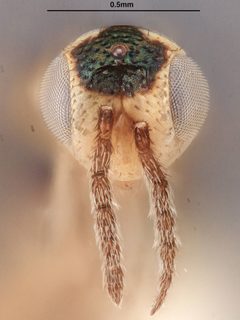
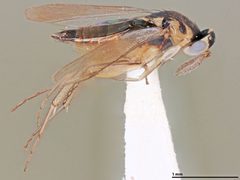
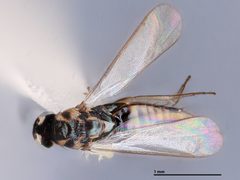
Elasmus polistis is a minute in the Eulophidae, first described by Burks in 1971. It is an ectoparasitoid specializing on the of paper wasps in the Polistes. The has been documented attacking and pupae inside nests, entering despite defensive by wasps. It has been recorded from the United States and Brazil, with confirmed host associations including multiple Polistes species.
Pronunciation
How to pronounce Elasmus polistis: //ɪˈlæzməs pəˈlɪstɪs//
These audio files are automatically generated. While they are not always 100% accurate, they are a good starting point.
Identification
Distinguished from other Elasmus by confirmed association with Polistes nests; minute size typical of Eulophidae (approximately 2 mm). Accurate identification to species level requires examination of morphological characters not described in available sources.
Images
Habitat
Nests of paper wasps in the Polistes, particularly those lacking a protective envelope. Has been reared from abandoned and active nests collected from human structures including door frames and porch eaves.
Distribution
United States (Florida, Georgia, Hawaii, Maryland, Missouri, Kansas); Brazil (Rio Grande do Sul, Minas Gerais).
Seasonality
emerge from nests in late autumn to mid-November in temperate North America; January emergences recorded from overwintered nests in Kansas.
Host Associations
- Polistes versicolor - and pupae parasitized; first South American record of attack documented
- Polistes metricus - reared from abandoned nests in Kansas
- Polistes exclamans - infests young nests while foundress is away foraging
- Polistes dorsalis - cited in literature
- Polistes instabilis - cited in literature
Life Cycle
Oviposits on and pupae of inside nest . Development occurs within host nest; emerge from host pupal cells.
Behavior
Flies in front of nest before entering; penetrates nest interior to oviposit on host stages. Efficient at parasitizing pupae despite defensive by host . Attack behavior involves entering nest , possibly through open cell tops, to access and pupae.
Ecological Role
Ectoparasitoid of social pupae; contributes to mortality in early developmental stages of Polistes colonies. May impair services provided by wasps due to .
Human Relevance
Occasionally reared by entomologists from collected paper wasp nests; not a direct pest of humans. Presence indicates successful exploitation of urban-nesting paper wasp .
Similar Taxa
- Dibrachys microgastri complexAlso reared from Polistes nests; distinguished by hyperparasitoid lifestyle and different (Pteromalidae)
- Other Elasmus speciesMany Elasmus are of Lepidoptera; E. polistis distinguished by documented Polistes specialization
More Details
Parasitism Rate
28.57% rate recorded in one study of 14 Polistes versicolor nests in Brazil, with present in four nests. Absence of protective nest envelope in P. versicolor may facilitate parasitoid access.
Collection Method
Successfully reared by placing abandoned or late-season Polistes nests in transparent containers and monitoring for emergences.
Sources and further reading
- BugGuide
- GBIF taxonomy match
- iNaturalist taxon
- NCBI Taxonomy
- Catalogue of Life
- Bug Eric: Another Micro Mystery
- Bug Eric: Wasp Wednesday: Polistes exclamans
- Bug Eric: A Potential New Host Record for Calliephialtes grapholithae (Hymenoptera: Ichneumonidae) from a Paper Wasp nest (Hymenoptera: Vespidae: Polistes metricus)
- First record of Elasmus polistis (Hymenoptera: Eulophidae), parasitoid of Polistes versicolor (Hymenoptera: Vespidae), in Minas Gerais, Brazil
- Attack Behavior of Elasmus polistis Burks (Hymenoptera: Eulophidae) in Nest of Polistes versicolor (Oliver) (Hymenoptera: Vespidae) and its Defensive Behavior
- Fantastic beasts and where to find them: updated Elasmus polistis Burks, 1971 (Hymenoptera: Eulophidae) hosts list and new host genus record