
Anicetus
Howard, 1896
Anicetus is a of parasitic in the Encyrtidae, first described by Howard in 1896. Members of this genus are classified within the Encyrtinae, a diverse group of chalcidoid wasps known primarily as of scale insects and other Hemiptera. The genus is represented in major entomological collections, including the University of California, Riverside (UCR) Encyrtidae collection, which holds multiple . Species such as Anicetus annulatus, A. communis, and A. toumeyellae have been documented in taxonomic literature.
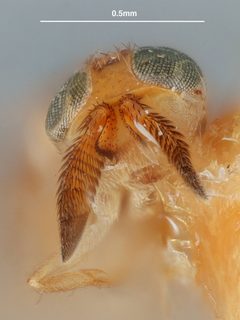
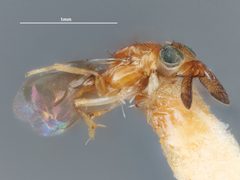
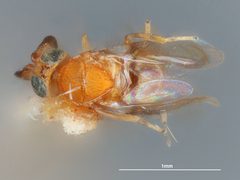
Pronunciation
How to pronounce Anicetus: /aˈniː.ke.tus/
These audio files are automatically generated. While they are not always 100% accurate, they are a good starting point.
Identification
Anicetus can be distinguished from other Encyrtidae by features of the , mesosoma, and wing venation typical of the Encyrtinae. Specific diagnostic characters for the genus include details of antennal segmentation and club structure, though precise identification to species level requires examination of microscopic morphological features. The genus is most readily separated from similar encyrtine genera by combinations of characters in the female and ovipositor structure.
Images
Distribution
Records indicate presence in California (USA), Karnataka (India), and Yunnan (China). Additional specimens have been documented from Mexico and other regions based on UCR collection holdings.
Ecological Role
As members of Encyrtidae, Anicetus function as , likely targeting scale insects (Coccoidea) or related Hemiptera based on -level associations documented for the Encyrtinae.
Human Relevance
within Encyrtidae, including Anicetus, have been investigated for of pest scale insects in agricultural systems. Voucher specimens from biological control projects are present in the UCR collection.
Similar Taxa
- MetaphycusBoth belong to Encyrtinae and share similar body plans and associations with scale insects; distinguished by antennal structure and details of mesosomal
- MicroterysAnother encyrtine with overlapping distribution and ; separation requires examination of wing venation and antennal club
More Details
Type specimens
specimens of Anicetus myartsevae (UCRC ENT 151289) and Anicetus villarreali (UCRC ENT 151092) are deposited at the Entomology Research Museum, University of California, Riverside
Etymology
The name derives from Greek 'anikētos' meaning 'invincible' or 'unconquered'