
Chalcis
Fabricius, 1787
Chalcis is a of in the Chalcididae, characterized by greatly enlarged hind with teeth and curved hind tibiae. Members of this genus are parasitoids of stratiomyid flies (Diptera: Stratiomyidae), ovipositing into masses laid on emergent vegetation near water. The genus includes Chalcis sispes, the first chalcidid wasp to have its fully sequenced.
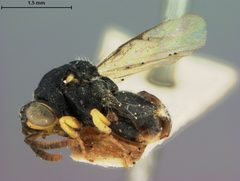
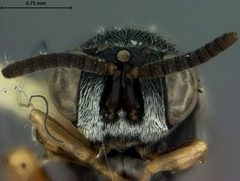
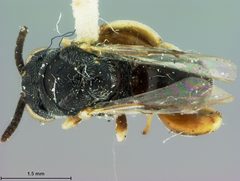
Pronunciation
How to pronounce Chalcis: /ˈkælsɪs/
These audio files are automatically generated. While they are not always 100% accurate, they are a good starting point.
Identification
Instantly recognisable by hugely expanded hind bearing teeth and curved hind tibiae; possesses a long metasomal petiole and very long hind . These enlarged hind legs are used as robust props while manipulating with the fore and mid legs.
Images
Habitat
Edges of water bodies where stratiomyid flies occur; associated with emergent vegetation where host masses are deposited.
Distribution
North temperate zone; includes the British Isles where Chalcis sispes is the most widespread of three British .
Host Associations
- Stratiomys flies (Stratiomyidae) - and larvae
Life Cycle
Females oviposit into masses of Stratiomys flies laid on emergent vegetation; development completes in the larva when it emerges from water to pupate. Eggs are distinctive, bearing stalks at either pole.
Behavior
Females use hugely expanded hind legs as robust props while manipulating with fore and mid legs; hind legs also used in fighting between females to defend host egg masses against competitors.
Ecological Role
of stratiomyid flies, regulating of these dipteran in aquatic and semi-aquatic .
More Details
Genome sequencing
Chalcis sispes represents the first complete sequence for the Chalcididae, comprising a 412.4 Mb nuclear assembly scaffolded into 6 chromosomal pseudomolecules and a 15.9 kb mitochondrial genome.