
Arge
Schrank, 1802
Species Guides
16- Arge abdominalis
- Arge cerulea
- Arge coccinea
- Arge curvaria
- Arge cyra
- Arge humeralis(Poison Ivy Sawfly)
- Arge illuminata
- Arge macleayi
- Arge ochropus(rose sawfly)
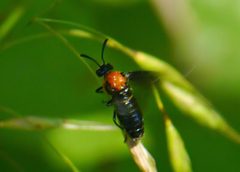
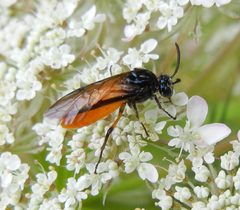
Arge is a of in the Argidae, Arginae. Members of this genus are distributed across the Northern Hemisphere, with records from Europe and North America. As with other argid sawflies, in this genus are herbivorous and typically associated with various woody plants as larvae. The genus was established by Schrank in 1802 and remains taxonomically valid.
Pronunciation
How to pronounce Arge: /ˈɑːrɡeɪ/
These audio files are automatically generated. While they are not always 100% accurate, they are a good starting point.
Identification
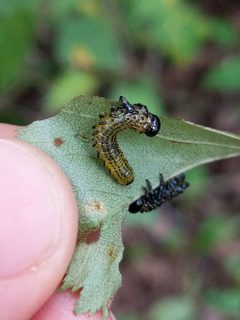
Members of Arge can be distinguished from other by their combination of morphological features typical of the Argidae . The genus is characterized by with a robust body form, and larvae that are external feeders on plant foliage. Specific diagnostic characters for the genus require examination of wing venation, structure, and other morphological details that distinguish it from related genera within Argidae.
Images
Habitat
in this are associated with a variety of terrestrial where their plants occur. Based on distribution records, these include temperate forest and woodland environments in Europe and North America.
Distribution
Records indicate presence in Denmark, Norway, Sweden, and Vermont in the United States. The has a Northern Hemisphere distribution, with additional unconfirmed reports from other temperate regions.
Life Cycle
As with other , Arge undergo complete with , larval, pupal, and stages. Larvae are external leaf feeders, though specific plant associations for most species remain incompletely documented.
Ecological Role
Larvae function as herbivores, consuming plant foliage. Their role in nutrient cycling and as potential prey for other organisms in their has not been quantitatively assessed.
Sources and further reading
- BugGuide
- Wikipedia
- GBIF taxonomy match
- iNaturalist taxon
- NCBI Taxonomy
- Catalogue of Life
- Stalking tigers in Argentina | Beetles In The Bush
- Tiger beetles in Argentina’s Chaco forest | Beetles In The Bush
- Eriopis connexa on soybean in Argentina | Beetles In The Bush
- Stink Bugs on Soybean in Argentina | Beetles In The Bush
- Bichos Argentinos #5 – Cyrtocoris egeris | Beetles In The Bush
- Bichos Argentinos #10 – Friday Formicine | Beetles In The Bush
- Diet predicts performance trade-offs during Atlantic salmon ontogeny
- A study of location selection for large agricultural wholesale markets under the perspective of modern circulation.