
Townsendiella
Crawford, 1916
Species Guides
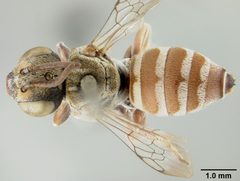
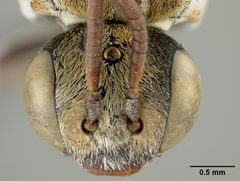
2Townsendiella is a of cuckoo bees in the Apidae, established by Crawford in 1916. The genus contains four described found in arid regions of western North America. As cleptoparasitic bees, females lay in the nests of other species, with their larvae consuming the 's food stores. Townsendiella is the sole genus in the tribe Townsendiellini.

Pronunciation
How to pronounce Townsendiella: /taʊnˌzɛndiˈɛlə/
These audio files are automatically generated. While they are not always 100% accurate, they are a good starting point.
Identification
Townsendiella can be distinguished from other nomadine cuckoo bees by their relatively small size and slender build compared to the more robust Nomada. The lacks the bright yellow and black banding common in many Nomada species, instead showing more subdued coloration with reddish or brownish tones. Males of T. have notably enlarged hind legs with modified tibial spurs, a distinctive trait among apid bees.
Images
Habitat
Arid and semi-arid environments including desert scrub, chaparral, and dry grasslands. Associated with sandy or well-drained soils suitable for ground-nesting bees.
Distribution
Mexico and the southwestern United States (California, Arizona, New Mexico, Texas). Records extend from southern California eastward to western Texas and south into Baja California and mainland Mexico.
Seasonality
have been recorded primarily in spring and early summer, with periods generally from March through June depending on elevation and latitude.
Host Associations
- Melitoma - T. pulchra has been reared from nests of Melitoma bees ( Apidae)
Life Cycle
Cleptoparasitic development: females deposit in nests during provisioning, larvae hatch and consume host provisions and often the host egg or larva. Developmental stages follow typical holometabolous pattern but within host .
Behavior
Females are known to enter nests to oviposit, a observed in T. pulchra entering Melitoma nests. Males of T. possess modified hind legs, though the function of these structures remains unstudied.
Ecological Role
Human Relevance
No direct economic importance. Rarely encountered due to low abundance and cryptic . May serve as for healthy of native ground-nesting bees in arid .
Similar Taxa
- NomadaSimilar size and cleptoparasitic lifestyle, but Nomada typically display bold yellow and black warning coloration, while Townsendiella shows more uniform reddish-brown coloration. Nomada belongs to tribe Nomadini, whereas Townsendiella is placed in its own tribe Townsendiellini based on morphological differences including wing venation and male genitalia.
- EpeolusBoth are cleptoparasitic bees in Nomadinae, but Epeolus have distinct pale hair bands on and are associated with Colletidae , whereas Townsendiella lacks such banding and parasitizes Apidae.
More Details
Taxonomic history
Townsendiella was originally described by Crawford in 1916 with T. pulchra as type . The tribe Townsendiellini was established to accommodate this based on unique morphological features including reduced wing venation and distinctive male genitalia. The genus remained until 1936, with two additional species described in 1942 and 2015.
Conservation status
No have been assessed by IUCN. All four species are known from relatively few specimens, with T. described from only two male specimens. loss in arid southwestern regions may pose threats, though trends are unknown.