
Nomada affabilis
Cresson, 1878
nomad bee
Nomada affabilis is a of kleptoparasitic nomad bee in the Apidae, first described by Cresson in 1878. As a member of the Nomada, it exhibits the characteristic cuckoo bee lifestyle of laying in the nests of species rather than building its own nests or collecting pollen. The species is distributed across North America and comprises two recognized : Nomada affabilis affabilis and Nomada affabilis dallasensis. Like other nomad bees, females likely locate host nests using chemical cues and possess reduced scopal structures for pollen collection.
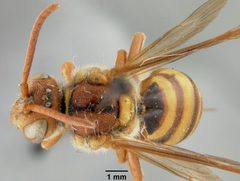
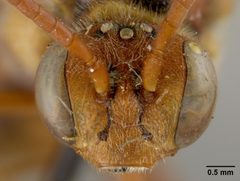
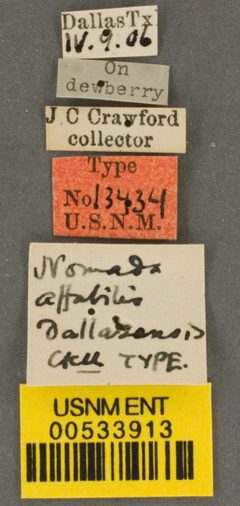
Pronunciation
How to pronounce Nomada affabilis: /noˈmaː.da afˈfa.bɪ.lɪs/
These audio files are automatically generated. While they are not always 100% accurate, they are a good starting point.
Identification
Identification of Nomada affabilis requires examination of specific morphological features distinguishing it from other Nomada . Members of the Nomada typically exhibit -like coloration with reduced body hair compared to pollen-collecting bees. Accurate species-level identification generally necessitates microscopic examination of genitalic structures and other diagnostic characters. The two (N. a. affabilis and N. a. dallasensis) may show geographic and subtle morphological differentiation.
Images
Distribution
North America. The has been recorded with presence status in North America, with showing potentially distinct geographic ranges: Nomada affabilis affabilis (described from the original type locality) and Nomada affabilis dallasensis (described by Cockerell in 1911, suggesting association with the Dallas, Texas region).
Ecological Role
As a kleptoparasite (cuckoo bee), Nomada affabilis functions as a within . Females lay in bee nests, and emerging larvae consume the host's pollen provisions and typically kill the host egg or larva. This parasitic lifestyle reduces the reproductive success of host and may influence host nesting and .
Similar Taxa
- Other Nomada speciesNumerous Nomada share similar kleptoparasitic , -like appearance, and North American distribution. Differentiation requires detailed morphological examination.
- Epeolus speciesAnother of cuckoo bees in Apidae with similar parasitic lifestyle and reduced scopal hairs, though Epeolus typically parasitizes Colletes bees rather than Andrena .
Sources and further reading
- BugGuide
- Wikipedia
- GBIF taxonomy match
- iNaturalist taxon
- NCBI Taxonomy
- Catalogue of Life
- Image by UC Davis Alumnus Ian Wright Appears in ESA World Calendar | Bug Squad
- entomology | Blog - Part 10
- Northern Ireland, invertebrate finds in review 2023 - Buglife Blog - Buglife
- Not-so Solitary Bees - Buglife Blog - Buglife
- Bare ground experiments to help save rare bees and wasps - Buglife Blog - Buglife
- behaviour | Blog