
Hexepeolus
Linsley & Michener, 1937
Species Guides
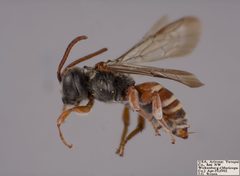
1Hexepeolus is a of cuckoo bees in the Apidae, established by Linsley and Michener in 1937. It represents the sole genus within the tribe Hexepeolini and contains only one described , Hexepeolus rhodogyne. As a member of the Nomadinae, these bees exhibit kleptoparasitic , laying in the nests of other species. The genus is rarely encountered, with minimal observational records.
Pronunciation
How to pronounce Hexepeolus: /hɛksɛpiˈoʊləs/
These audio files are automatically generated. While they are not always 100% accurate, they are a good starting point.
Identification
Distinguished from other nomadine by tribal-level classification (Hexepeolini); specific diagnostic features for the genus are not well documented in accessible literature. The single H. rhodogyne can be identified as a member of this genus by its taxonomic assignment.
Images
Distribution
Geographic range is poorly documented; the has been recorded from limited localities with sparse observational data.
Behavior
As a member of Nomadinae, exhibits kleptoparasitism (cuckoo ), laying in nests; specific host for H. rhodogyne remain undocumented.
Ecological Role
Functions as a kleptoparasite within , potentially influencing of .
Similar Taxa
- NomadaBoth are nomadine cuckoo bees; Nomada is far more -rich and commonly encountered, whereas Hexepeolus is and rarely observed.
- EpeolusSimilar in being cleptoparasitic bees with some morphological convergence; Epeolus belongs to a different tribe (Epeolini) and has numerous with better-documented .