
Triepeolus quadrifasciatus
(Say, 1823)
Four-striped Longhorn-Cuckoo
Species Guides
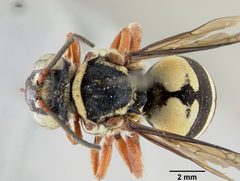
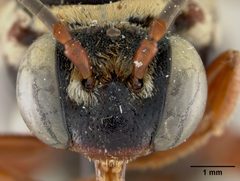
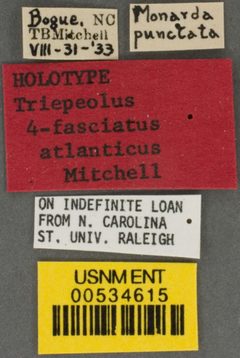
1Triepeolus quadrifasciatus is a cleptoparasitic in the Apidae, commonly known as the Four-striped Longhorn-Cuckoo. As a member of the tribe Epeolini, this is a of other bees, specifically targeting in the tribe Eucerini (long-horned bees). The species occurs throughout North America and has been documented visiting flowers of native plants including Dalea candida (White Prairie Clover) and Grindelia camporum (Great Valley gumplant).
Pronunciation
How to pronounce Triepeolus quadrifasciatus: /triːˈɛpiːələs kˌwɒdrɪfæsiˈɑːtəs/
These audio files are automatically generated. While they are not always 100% accurate, they are a good starting point.
Images
Distribution
North America. Documented from Colorado, California, and across the Great Plains region. GBIF records indicate presence throughout North America.
Seasonality
have been observed from June to August, coinciding with bloom periods of plants such as Dalea candida.
Behavior
Females are that deposit in the nests of bees. The has been observed visiting flowers, with males potentially patrolling for mating opportunities with foraging females.
Ecological Role
As a cleptoparasitic , this functions as a natural control for its bees, primarily long-horned bees (Eucerini). It contributes to pollination through incidental pollen transfer during flower visitation.
Sources and further reading
- BugGuide
- GBIF taxonomy match
- iNaturalist taxon
- NCBI Taxonomy
- Catalogue of Life
- Bembicid Holdings | Entomology Research Museum
- The Native Bees in the UC Davis Bee Haven | Bug Squad
- What Native California Plants Are Best for Attracting Pollinators? | Bug Squad
- Bug Eric: Wasp Wednesday: Wasp vs. Bug
- Bug Eric: White Prairie Clover: An Awesome Blossom
- Northern Ireland, invertebrate finds in review 2023 - Buglife Blog - Buglife