
Zacosmia
Ashmead, 1899
Species Guides
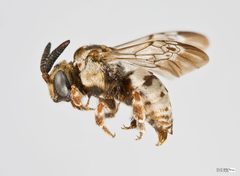
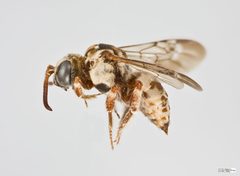
1- Zacosmia maculata(Spotted Mini-digger-Cuckoo)
Zacosmia is a of bees in the Apidae, tribe Melectini, established by Ashmead in 1899. The genus contains one described , Zacosmia maculata. Members are classified as cuckoo bees (kleptoparasites), meaning they lay in the nests of other species rather than provisioning their own. The genus is placed within the Apinae, a diverse group that includes honey bees, bumble bees, and numerous solitary bee lineages.
Pronunciation
How to pronounce Zacosmia: /zaˈkɔs.mi.a/
These audio files are automatically generated. While they are not always 100% accurate, they are a good starting point.
Identification
Zacosmia can be distinguished from other Melectini by features of the male genitalia and body patterns. The single described , Z. maculata, has maculated (spotted) coloration. Accurate identification to species level requires examination of morphological characters not visible in field observations.
Images
Life Cycle
As kleptoparasitic bees, Zacosmia females do not construct nests or collect pollen. Instead, they deposit in the nests of bees, where their larvae consume the host's pollen provisions. The specific host for Z. maculata have not been documented.
Behavior
Females are known to enter the nests of other bees to deposit , a characteristic of cuckoo bees in the tribe Melectini. No detailed behavioral studies have been published for this .
Ecological Role
As a kleptoparasite, Zacosmia functions as a natural regulator of its . Its presence indicates established populations of the host bees required for .
Similar Taxa
More Details
Taxonomic history
The was established by William Harris Ashmead in 1899. The single Zacosmia maculata was described by Cresson in 1878 and later transferred to this genus.
Data limitations
The is poorly represented in collections and scientific literature. Most information derives from taxonomic descriptions rather than ecological or behavioral studies.