
Melecta
Latreille, 1802
Mourning Bees, Cuckoo Bees
Species Guides
3- Melecta edwardsii(Edward's melectum)
- Melecta pacifica
- Melecta separata
Pronunciation
How to pronounce Melecta: /mɛˈlɛkta/
These audio files are automatically generated. While they are not always 100% accurate, they are a good starting point.
Identification
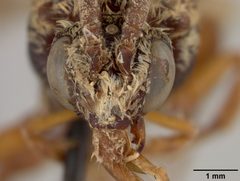
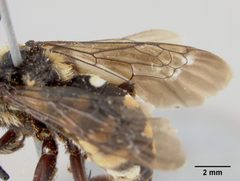
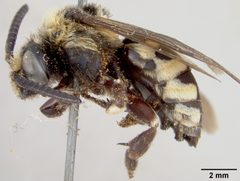
Melecta are generally robust, hairy bees that resemble their in the Anthophora. They lack the pollen-carrying scopa (brushes) on the hind legs that are present in non-parasitic bees, as they do not collect pollen for their own offspring. This absence of scopal hairs is a key diagnostic feature distinguishing cleptoparasitic bees from pollen-collecting relatives.
Images
Distribution
The has been recorded in North America (including Colorado), Europe (Denmark, Sweden), and Asia (Republic of Korea). Specific distribution varies by .
Host Associations
- Anthophora pacifica - Melecta pacifica fulvida is a of this digger bee
Behavior
Females exhibit cleptoparasitic : they enter the burrows of bees (particularly Anthophora ) and deposit in the provisioned by the host. The Melecta larva hatches and consumes the stored pollen and nectar, killing the host egg or larva in the process.
Ecological Role
As kleptoparasites, Melecta function as natural regulators of their species. They do not contribute directly to pollination as do not collect pollen.
Similar Taxa
- Anthophora of Melecta ; Melecta females resemble Anthophora in size and hairiness but lack pollen-collecting structures on the hind legs
- BombusMelecta is phylogenetically distant from bumble bees despite some superficial similarities in robust, hairy appearance
- ApisHoney bees are distantly related to Melecta; molecular places Melecta closer to (Frieseomelitta) than to honey bees
Sources and further reading
- BugGuide
- Wikipedia
- GBIF taxonomy match
- iNaturalist taxon
- NCBI Taxonomy
- Catalogue of Life
- Bug Eric: A Beautiful Place to "Bee"
- Ecology and Behavior of Melecta separata callura (Hymenoptera: Anthophoridae)
- Cleptoparasitic Behavior and Immatures of the BeeMelecta duodecimmaculata(Apoidea: Apidae: Melectini) Appendix: Tribal Descriptions of the Anthophorini and Melectini Based on their Mature Larvae
- Insight on kleptoparasitic bee, Melecta chinensis (hymenoptera: Apidae), in the Republic of Korea: Morphology, biology and molecular characteristics