
Anthophora pacifica
Cresson, 1879
Pacific Digger Bee
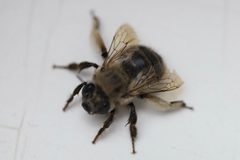
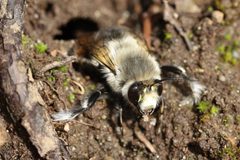
Anthophora pacifica is a solitary, ground-nesting digger bee native to western North America. Females excavate burrows in soil to construct individual nests provisioned with pollen and nectar. The serves as the primary for the cleptoparasitic Melecta pacifica fulvida, which invades its nests to lay . A. pacifica is part of the diverse Anthophora , which includes other notable digger bees such as the -mimic A. bomboides stanfordiana.
Pronunciation
How to pronounce Anthophora pacifica: //ænˈθɒfərə pəˈsɪfɪkə//
These audio files are automatically generated. While they are not always 100% accurate, they are a good starting point.
Identification
May be distinguished from similar digger bees by geographic range in western North America; specific diagnostic features require expert examination. The Melecta pacifica fulvida is associated exclusively with this , providing indirect identification evidence where the is observed.
Images
Habitat
Ground-nesting in soil substrates; specific preferences have been documented in Colorado including bare earth on trails and higher-elevation areas.
Distribution
Western North America; documented in Colorado and other western states. Not to be confused with the introduced eastern Asian Anthophora villosula, which has established in the mid-Atlantic region.
Seasonality
Active during spring and summer months; timing tied to flowering and local climate conditions.
Diet
; females collect pollen and nectar from multiple flowering plant to provision .
Host Associations
- Melecta pacifica fulvida - Female Melecta enters burrows and lays ; larvae consume provisions intended for A. pacifica offspring
Life Cycle
Solitary lifecycle with : females excavate soil burrows, construct lined , provision each with pollen-nectar mass, deposit single , and seal cell. Larvae develop within cells, likely in prepupal or pupal stage before the following spring.
Behavior
Females are solitary nesters, each constructing and provisioning her own burrow independently. Males may aggregate near nesting areas. The exhibits typical digger bee of excavating soil and creating individual .
Ecological Role
of wild flowering plants; serves as supporting cleptoparasitic . Ground-nesting activity contributes to soil aeration and nutrient cycling in local .
Similar Taxa
- Anthophora villosulaIntroduced Asian now established in eastern North America; distinguished by geographic separation and introduced status
- Anthophora bomboides stanfordianaPacific coastal digger bee with distinctive sand turret nests; distinguished by specificity and nest architecture
- Anthophora abruptaEastern North American miner with similar ground-nesting ; distinguished by geographic range
More Details
Taxonomic Note
Authority sometimes cited as Cresson, 1878 or Cresson, 1879 in different sources; accepted name is Anthophora pacifica Cresson, 1879 per GBIF and Catalogue of Life.
Sources and further reading
- BugGuide
- Wikipedia
- GBIF taxonomy match
- iNaturalist taxon
- NCBI Taxonomy
- Catalogue of Life
- Digging the Digger Bees and the Newly Published Research | Bug Squad
- UC Davis: All A'Buzz With Bee Nests and Art | Bug Squad
- Congratulations, Microbiologist Shawn Christensen: Best Dissertation | Bug Squad
- Bug Eric: A Beautiful Place to "Bee"
- A bumble bee, or not a bumble bee, that is the question: Miner bees, Anthophora abrupta — Bug of the Week
- Researchers Track Range, Impact of Non-Native Bee in U.S.