
Melissodes coreopsis
Robertson, 1905
Tickseed Longhorn Bee
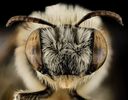
Melissodes coreopsis is a of long-horned bee in the Apidae, described by Robertson in 1905. The 'Tickseed Longhorn ' reflects its association with Coreopsis flowers. Like other members of the Melissodes, it is a solitary ground-nesting bee that contributes to pollination of native wildflowers. Males of this genus are known to form sleeping on vegetation at night while females nest underground.
Pronunciation
How to pronounce Melissodes coreopsis: /mɛˈlɪs.oʊ.diːz kɔːr.iˈɒp.sɪs/
These audio files are automatically generated. While they are not always 100% accurate, they are a good starting point.
Images
Habitat
Occurs in open where Coreopsis grow, including prairies, meadows, and glades. Associated with lance-leaved coreopsis (Coreopsis lanceolata) and other yellow composite flowers that provide pollen and nectar resources.
Distribution
North America and Middle America. Records indicate presence in the United States, with specific observations from Missouri and surrounding regions.
Seasonality
Active in spring when Coreopsis flowers bloom. Field observations from Missouri document activity during spring wildflower season, particularly when lance-leaved coreopsis is in full bloom.
Diet
feed on pollen and nectar, primarily from Coreopsis and other yellow composite flowers (Asteraceae).
Host Associations
- Coreopsis lanceolata - POLLINATOR_OFObserved foraging on lance-leaved coreopsis flowers
- Coreopsis - POLLINATOR_OF-level association reflected in epithet
Life Cycle
Solitary ground-nesting . Females excavate individual burrows in soil. Males do not participate in nest construction and are known to form sleeping on vegetation at night.
Behavior
Males form overnight sleeping clusters on stems and flowers, characteristic of the Melissodes. Males are territorial and defend flower resources for females of their . Males cannot sting; only females possess stingers.
Ecological Role
of native wildflowers, particularly Coreopsis and other Asteraceae. Contributes to plant in prairie and glade .
Similar Taxa
- Melissodes agilisSimilar male sleeping and flower association, but M. agilis is associated with different plants including Mexican sunflower (Tithonia)
- Melissodes robustiorSimilar and ; males form sleeping clusters on flowers, distinguished by subtle morphological differences requiring expert identification
Sources and further reading
- BugGuide
- GBIF taxonomy match
- iNaturalist taxon
- NCBI Taxonomy
- Catalogue of Life
- 'Bee' One in a Million | Bug Squad
- About Those Sleepovers... | Bug Squad
- The Year 2017: 'Survival of the Flittest' | Bug Squad
- What's Not to Love About 'Boys' Night Out'? | Bug Squad
- 2023: These Are a Few of My Favorite Things | Bug Squad
- Spring beetles on Coreopsis flowers | Beetles In The Bush