
Martinapis
Cockerell, 1929
morning long-horned bees
Species Guides
2- Martinapis luteicornis(yellow-horned morning long-horned bee)
- Martinapis occidentalis(western morning long-horned bee)
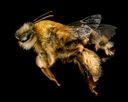
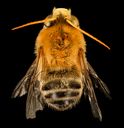
Martinapis is a of long-horned bees in the Apidae, established by Cockerell in 1929. The genus contains at least three described distributed in western North America. These bees are notable for their early morning foraging activity, a trait reflected in for some species. The genus belongs to the tribe Eucerini, a group characterized by males having exceptionally long .

Pronunciation
How to pronounce Martinapis: /ˌmɑr.tɪˈneɪ.pɪs/
These audio files are automatically generated. While they are not always 100% accurate, they are a good starting point.
Identification
Members of Martinapis can be distinguished from other Eucerini by a combination of morphological features including specific antennal proportions and facial markings. The genus is part of the 'morning ' group within Eucerini, though precise distinguishing characters require examination of male genitalia and antennal segment ratios. Females lack the extreme antennal elongation seen in males.
Images
Distribution
Western North America. Known occur in regions including the western United States, with specific ranges varying by species: M. occidentalis is found in the western states, while other species have more restricted distributions.
Seasonality
Active in spring and early summer. exhibit distinctive early morning foraging , with activity concentrated in the hours shortly after dawn.
Behavior
are known for early morning foraging activity, emerging to collect nectar and pollen when temperatures are cooler than those tolerated by most bees. This to matinal activity pattern reduces competition with other bees and may represent an to arid environments. Males perch on vegetation and patrol for females.
Ecological Role
As , Martinapis contribute to pollen and nectar transfer for early-blooming desert and semi-arid plants. Their morning activity allows pollination services during periods when most other bees are inactive.
Similar Taxa
- EuceraAlso in tribe Eucerini with long-horned males; distinguished by antennal proportions and male genitalia structure
- MelissodesAnother Eucerini with long-horned males; Martinapis distinguished by morning activity timing and specific morphological characters
- XenoglossaRelated Eucerini with similar body form; differs in plant associations and male antennal structure
More Details
Taxonomic history
Martinapis was described by Theodore Dru Alison Cockerell in 1929. The has been variously treated as a subgenus or full genus within Eucerini; current treatments generally recognize it at genus rank.
Species diversity
Three are currently recognized: Martinapis bipunctata (Friese, 1908), Martinapis luteicornis (Cockerell, 1896), and Martinapis occidentalis Zavortink & LaBerge, 1976. Additional undescribed species may occur in the southwestern United States and Mexico.