
Martinapis luteicornis
(Cockerell, 1896)
yellow-horned morning long-horned bee, saffron-horned morning-longhorn
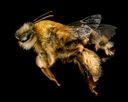
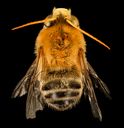
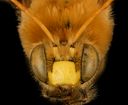
Martinapis luteicornis is a of long-horned bee in the Apidae, characterized by the elongated typical of males in this group. The species is found in Central America and North America. reference the distinctive yellow or saffron-colored antennae of males. Like other members of the tribe Eucerini, this species exhibits pronounced in antennal length.
Pronunciation
How to pronounce Martinapis luteicornis: /ˌmɑrtɪˈneɪpɪs ˌluːteɪˈkɔrnɪs/
These audio files are automatically generated. While they are not always 100% accurate, they are a good starting point.
Identification
Males of Martinapis luteicornis can be recognized by their elongated , which are significantly longer than those of females and extend well beyond the body—this is the characteristic "long-horned" trait that gives the group its . The specific epithet "luteicornis" refers to the yellow (Latin: luteus) antennae (cornis). Females have comparatively short antennae. Further diagnostic features distinguishing this from and other Eucerini require examination of morphological details not specified in available sources.
Images
Distribution
Central America and North America. Specific preferences and elevational range within this broad distribution are not documented in available sources.