
Centris rhodopus
Cockerell, 1897
red-legged centris, Red-legged Oil-Digger
Centris rhodopus is a of oil-collecting in the tribe Centridini, Apidae. It is distributed across Central America and North America. Like other Centris species, it has been observed collecting floral oils from specialized oil-producing flowers, particularly in the Krameria. The species is part of a group of bees adapted to harvesting non-nectar floral rewards.
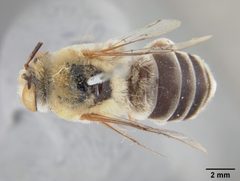
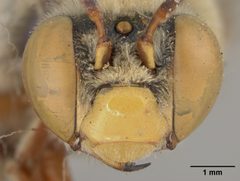
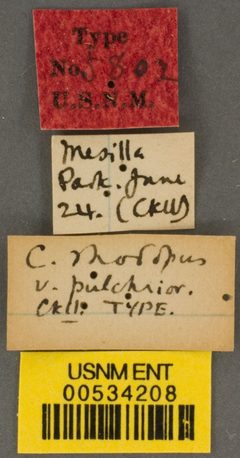
Pronunciation
How to pronounce Centris rhodopus: //ˈsɛn.trɪs roʊˈdoʊ.pəs//
These audio files are automatically generated. While they are not always 100% accurate, they are a good starting point.
Images
Distribution
Central America and North America; Caribbean region present. Specific records include the southwestern United States (Oklahoma, Texas, New Mexico, Arizona) and adjacent regions of Mexico.
Diet
Collects fatty oils from flowers, particularly from elaiophores of Krameria . These oils are mixed with pollen to provision larvae. Also utilizes other oil-producing plants.
Host Associations
- Krameria lanceolata - collects oils from elaiophores; primary pollination mutualism
Behavior
Female bees have been observed visiting Krameria flowers with a distinctive buzzing sound while moving between flowers at ground level. Oil collection involves gathering fatty oils from modified petal surfaces (elaiophores) rather than nectar.
Ecological Role
Similar Taxa
- Centris lanosasimilar oil-collecting and ; distinguished by morphological features and geographic distribution
More Details
Oil collection specialization
Centris rhodopus possesses specialized morphological adaptations for oil collection, including dense scopal hairs on the hind legs modified for absorbing and transporting floral oils rather than pollen alone.
Sources and further reading
- BugGuide
- Wikipedia
- GBIF taxonomy match
- iNaturalist taxon
- NCBI Taxonomy
- Catalogue of Life
- Crossidius hirtipes rhodopus in Adobe Valley, California | Beetles In The Bush
- Friday flower – Krameria lanceolata | Beetles In The Bush
- A Crossidius hirtipes subspecies blend zone… | Beetles In The Bush
- Great Basin Collecting Trip iReport | Beetles In The Bush