
Perdita interrupta
Cresson, 1878
California Poppy Fairy Bee
Species Guides
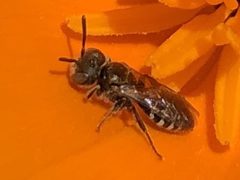
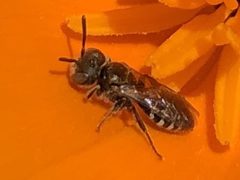
1Perdita interrupta is a of mining bee in the Andrenidae, commonly known as the California Poppy Fairy . It is a solitary, ground-nesting bee native to North America. The species is part of the large Perdita, which contains over 800 species of small mining bees in North America. Like other Perdita species, it is likely a , though specific plant associations require further documentation.
Pronunciation
How to pronounce Perdita interrupta: /pɛrˈdiːta ɪn.təˈrʌp.tə/
These audio files are automatically generated. While they are not always 100% accurate, they are a good starting point.
Identification
As a member of the Perdita, this is extremely small, typically measuring 5–10 mm in length. The genus is characterized by minute size, often with pale or yellowish markings on the and body. Specific identification of P. interrupta requires examination of subtle morphological features including genitalia and wing venation patterns. The species name "interrupta" likely refers to interrupted color patterns on the or other body segments. Identification to species level is challenging and typically requires examination or reference to original species descriptions.
Images
Distribution
North America. The "California Poppy Fairy " suggests association with California and the western United States, though precise range boundaries are not well documented in available sources.
Host Associations
- California poppy - probable Inferred from ; specific plant relationships require confirmation
Behavior
As a solitary mining bee, females excavate burrows in soil for nesting. Males likely patrol nesting areas or vegetation to locate females. Like other Andrenidae, are active during daylight hours and visit flowers for nectar and pollen.
Ecological Role
. As with other native bees, contributes to pollination of wildflowers and potentially agricultural crops. The may serve as a pollinator for particular plant species, though this requires further study.
Human Relevance
Contributes to services through pollination. No documented direct economic importance, but native bees collectively provide substantial pollination value. The has been documented through citizen science platforms including iNaturalist, with over 300 observations recorded.
Similar Taxa
- Other Perdita speciesThe Perdita contains over 800 , many of which are extremely similar in external . Accurate identification requires examination of male genitalia and other microscopic features.
- Other Panurginae beesMembers of this share small size and ground-nesting habits. Differentiation requires detailed morphological analysis.
More Details
Nomenclature
The was described by Cresson in 1878. The epithet "interrupta" refers to interrupted or broken color patterns, a common naming convention in the .
Conservation status
Conservation status has not been formally assessed. Like many native bees, may be vulnerable to loss, exposure, and climate change, but specific threats are undocumented.
Research needs
Basic natural history information including confirmed plants, nest , and remain undocumented in published literature.