
Perdita bequaerti
Viereck, 1917
Bequaert's miner bee, Bequaert's perdita
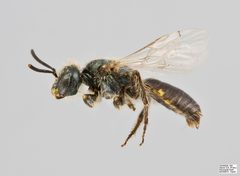
Perdita bequaerti is a of mining bee in the Andrenidae, native to North America. The species was described by Viereck in 1917 and is one of many small, solitary bees in the Perdita. It is known to occur in two : the nominate P. b. bequaerti and P. b. indianensis described by Cockerell in 1922. Like other Perdita species, it is a ground-nesting that excavates burrows in soil.
Pronunciation
How to pronounce Perdita bequaerti: /pɛrˈdiːtə bɛˈkwɑrti/
These audio files are automatically generated. While they are not always 100% accurate, they are a good starting point.
Images
Distribution
North America. The Perdita bequaerti indianensis has been recorded from Indiana.
Behavior
As a member of the mining bee Andrenidae, this nests in burrows excavated in soil. Multiple females may nest in close proximity, creating that can appear hive-like but do not involve social cooperation.
More Details
Subspecies
Two are recognized: Perdita bequaerti bequaerti (nominate) and Perdita bequaerti indianensis Cockerell, 1922.
Taxonomic authority
Original description by Henry Lorenz Viereck in 1917.
Sources and further reading
- BugGuide
- Wikipedia
- GBIF taxonomy match
- iNaturalist taxon
- Catalogue of Life
- Primary Type List | Entomology Research Museum
- You, Too, Can Plant a Pollinator Garden | Bug Squad
- 'Am I Even a Bee?' Identity Crisis Unfolds in This Charming Book | Bug Squad
- Researchers Develop Genome Map for Mojave Poppy Bee
- Bug Eric: World Bee Day....A Little "Bee"hind
- The best species name ever! | Beetles In The Bush