
Panurginus
Nylander, 1848
mining bees
Species Guides
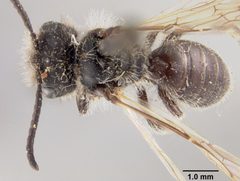
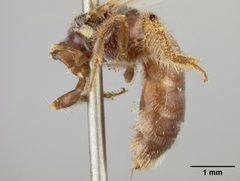
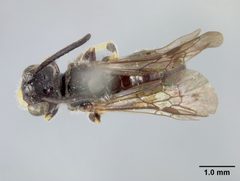
1Panurginus is a of mining bees in the Andrenidae, with more than 50 described distributed across the Holarctic region. Species occur in diverse including alpine zones of Central Europe, the Siberian taiga, and steppe regions of Central Asia. Some species, such as P. herzi and P. montanus, are morphologically very similar and require quantitative measurements for reliable identification. The genus exhibits variable pollen specialization, with individual species ranging from narrow to broad .
Pronunciation
How to pronounce Panurginus: //ˌpænɜːrˈdʒaɪnəs//
These audio files are automatically generated. While they are not always 100% accurate, they are a good starting point.
Identification
Females of some , particularly P. herzi and P. montanus, are morphologically very similar and difficult to separate visually; quantitative characters such as length to head width ratio have been established for distinguishing these species. The belongs to the Panurginae and can be distinguished from related genera by characters of the male genitalia and other morphological features typical of the tribe Panurgini.
Images
Habitat
Alpine zones in Central Europe; Siberian taiga and steppe regions; open in the Palearctic.
Distribution
Holarctic distribution including: Central European Alps; Siberia and Russian Far East; Kazakhstan; Mongolia; Northern China; Scandinavia (Norway, Sweden).
Diet
Pollen collected from flowers; vary from narrow that collect pollen from a single plant to pronounced that harvest pollen from up to 17 different plant .
Ecological Role
of flowering plants in alpine and temperate .
Similar Taxa
- AndrenaBoth are mining bees in Andrenidae, but Andrena is in Andreninae while Panurginus is in Panurginae; Andrena is far more speciose with different morphological characters
- PanurgusBoth in tribe Panurgini, but Panurgus has different male genitalia and other distinguishing morphological features
Sources and further reading
- BugGuide
- Wikipedia
- GBIF taxonomy match
- iNaturalist taxon
- NCBI Taxonomy
- Catalogue of Life
- Bees of the genus Panurginus in Siberia, Far East of Russia, and Allied Areas (Hymenoptera: Andrenidae, Panurginae)
- Pollen host selection by predominantly alpine bee species of the genera Andrena, Panurginus, Dufourea, Megachile, Hoplitis and Osmia (Hymenoptera, Apoidea)
- Figure 1 from: Müller A (2018) Pollen host selection by predominantly alpine bee species of the genera Andrena, Panurginus, Dufourea, Megachile, Hoplitis and Osmia (Hymenoptera, Apoidea). Alpine Entomology 2: 101-113. https://doi.org/10.3897/alpento.2.29250
- Figures 10-15 from: Müller A (2018) Pollen host selection by predominantly alpine bee species of the genera Andrena, Panurginus, Dufourea, Megachile, Hoplitis and Osmia (Hymenoptera, Apoidea). Alpine Entomology 2: 101-113. https://doi.org/10.3897/alpento.2.29250
- Figures 2-9 from: Müller A (2018) Pollen host selection by predominantly alpine bee species of the genera Andrena, Panurginus, Dufourea, Megachile, Hoplitis and Osmia (Hymenoptera, Apoidea). Alpine Entomology 2: 101-113. https://doi.org/10.3897/alpento.2.29250