
Protoxaea gloriosa
(Fox, 1893)
glorious protoxaea
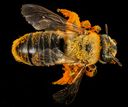
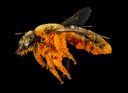
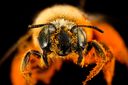
Protoxaea gloriosa is a of mining bee in the Andrenidae, Oxaeinae. Males exhibit pronounced territorial , establishing and defending flowering plants during morning hours to increase mating opportunities with virgin females. The species shows strong seasonality tied to summer rainfall patterns, with principal triggered by first soaking rains. Females collect pollen primarily from Solanum and nectar from Asclepias, Verbesina, and Larrea. This is found in arid and semi-arid regions of the southwestern United States and Mexico.
Pronunciation
How to pronounce Protoxaea gloriosa: /proʊˈtɑksiə ɡlɔːˈriːoʊsə/
These audio files are automatically generated. While they are not always 100% accurate, they are a good starting point.
Identification
Males can be identified by their territorial around flowering plants during morning hours (7-11 a.m.), aggressively excluding all insect visitors except females. Females may be recognized by their pollen collection behavior on Solanum in early morning (6-9:30 a.m.) and subsequent nectar foraging on Asclepias, Verbesina, and Larrea. The species belongs to the distinctive Oxaeinae within Andrenidae, characterized by particular morphological traits of the hind legs and wing venation. Specific morphological characters distinguishing P. gloriosa from other Protoxaea species are not documented in available sources.
Images
Habitat
Arid and semi-arid environments with summer rainfall patterns. Territories are established around flowering plants, including those visited by females for nectar and/or pollen as well as plants not observed to be visited by females. The occurs in areas where summer monsoon rains trigger and activity.
Distribution
North America and Central America. Documented from the vicinity of Douglas, Arizona, USA. GBIF records indicate presence in Middle America and North America.
Seasonality
Principal occurs in late July following first soaking summer rains. In the Douglas, Arizona area, males establish territories as early as July 16, with mass emergence July 26-27. Activity pattern: males guard territories 7-11 a.m.; females collect pollen 6-9:30 a.m. and nectar until ~11:30 a.m.; males leave territories late morning and gather in "sleeping balls" in afternoon.
Diet
Females collect pollen from Solanum and nectar from Asclepias, Verbesina, and Larrea. Males consume nectar from flowering plants after leaving territorial activities late morning. Newly emerged females seek nectar for their own use before pollen collection.
Life Cycle
triggered by first soaking summer rains. Newly emerged females make first during morning hours. Mating occurs immediately upon female emergence, facilitated by male territorial . Mated females subsequently lose attractiveness to males and forage without interference. Specific details of nesting, larval development, and are not documented.
Behavior
Males establish and defend territories around flowering plants during morning hours (7-11 a.m.), aggressively excluding all insect intruders except females. This territoriality increases probability of immediate mating with virgin females. After leaving territories late morning, males seek nectar, then gather gregariously in large "sleeping balls" in afternoon—a marked contrast to their earlier intolerance of conspecific males. Females exhibit sequential foraging: early morning pollen collection from Solanum, followed by nectar foraging from Asclepias, Verbesina, and Larrea until approximately 11:30 a.m.
Ecological Role
of multiple plant including Solanum, Asclepias, Verbesina, and Larrea. Male territorial reduces competition from other for pollen and nectar resources at guarded plants, potentially influencing local plant-pollinator network dynamics and structure.
Similar Taxa
- Other Andrenidae speciesMale territorial around flowers and aggressive defense against other bees is distinctive; most other mining bees lack this pronounced territoriality and interspecific aggression pattern.
- Other Protoxaea speciesSpecific morphological distinctions and behavioral differences among Protoxaea are not well documented; identification to species level may require examination of subtle morphological characters.
More Details
Territorial behavior significance
The territorial of male P. gloriosa represents one of the better-documented cases of resource-based territoriality in bees, where males defend flowering plants rather than sites or nest . This system increases male mating success by positioning males at locations where virgin females must visit for nutritional resources.
Research history
The was originally described as Megacilissa gloriosa by Fox in 1893 and later transferred to Protoxaea. The most detailed behavioral study remains that of Linsley (1963) based on observations near Douglas, Arizona.
Sources and further reading
- BugGuide
- Wikipedia
- GBIF taxonomy match
- iNaturalist taxon
- NCBI Taxonomy
- Catalogue of Life
- Grasshopper Collections and Survey
- The gloriously dichromatic Dasymutilla gloriosa | Beetles In The Bush
- Mutillidae | Beetles In The Bush
- Research Begins to Unravel Why Some Spiders are Social
- December | 2012 | Beetles In The Bush | Page 2
- Hymenoptera | Beetles In The Bush | Page 5
- Territorial Behavior among Males of Protoxaea gloriosa (Fox) (Hymenoptera: Andrenidae)