
Protoxaea
Cockerell & Porter, 1899
Species Guides
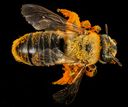
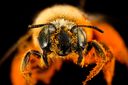
1- Protoxaea gloriosa(glorious protoxaea)
Protoxaea is a of mining bees in the Andrenidae, containing at least three described . The genus is notable for the well-documented territorial of males in at least one species, Protoxaea gloriosa. These bees are associated with flowering plants in arid environments and exhibit complex mating systems involving male territoriality and female resource collection.

Pronunciation
How to pronounce Protoxaea: /ˌproʊ.təˈziː.ə/
These audio files are automatically generated. While they are not always 100% accurate, they are a good starting point.
Images
Habitat
Arid or semi-arid environments with summer rainfall patterns; associated with flowering plants used for nectar and pollen collection.
Distribution
Documented from the vicinity of Douglas, Arizona; broader distribution unclear.
Seasonality
Principal in late July following first soaking summer rains; territorial observed from mid-July through emergence period.
Diet
Females collect pollen primarily from Solanum and nectar from Asclepias, Verbesina, and Larrea; males consume nectar after territorial periods.
Host Associations
- Solanum - pollen sourceprimary pollen source for females
- Asclepias - nectar sourceprimary nectar source for females
- Verbesina - nectar sourceprimary nectar source for females
- Larrea - nectar sourceprimary nectar source for females
Life Cycle
Principal of both sexes occurs simultaneously in late July following first soaking summer rains; males establish territories shortly after emergence.
Behavior
Males establish and defend territories on flowering plants during morning hours (approximately 7-11 a.m.), excluding all insect intruders except females. Territorial defense increases probability of mating with newly emerged virgin females. Mated females are permitted to visit guarded plants without interference. After territorial periods, males seek nectar and later form gregarious 'sleeping balls' in afternoon, exhibiting absent during territorial hours.
Ecological Role
Pollen and nectar collection from multiple plant ; male territorial reduces competition for floral resources among .
More Details
Taxonomic note
Contains at least three described : Protoxaea australis Hurd & Linsley, 1976; Protoxaea gloriosa (Fox, 1893); and Protoxaea micheneri Hurd & Linsley, 1976. Detailed behavioral observations exist only for P. gloriosa.
Research limitation
Most detailed ecological and behavioral information derives from a single 1963 study of Protoxaea gloriosa near Douglas, Arizona. Information for other and broader geographic ranges is not available.